
***DISCLAIMER***
OUR GOAL AT THE PRACTICAL MARKSMANSHIP PROJECT IS TO SHARE WHAT WORKS FOR US. HOWEVER, JUST BECAUSE IT WORKS AND IS SAFE FOR US DOES NOT VOID YOUR INDIVIDUAL RESPONSIBILITY FOR SAFE PRACTICES. ALL LOAD DATA PUBLISHED BY US IS SAFELY WORKED UP BEFORE. WE ARE NOT RESPONSIBLE FOR THE CONSEQUENCES OF UNSAFE PRACTICES
****UPDATE****
All loads that we develop for 38 Special and 357 Magnum are initially developed in my Smith and Wesson 686. While upon initial development this load performed well, during further testing and evaluation, this load was found to cause some sticky extraction in several other revolvers. DUE TO THIS, THIS LOAD WILL BE DISCONTINUED FROM MY LOADING PROCESS. The load is being backed off. Please refer to Reloading the 38 Special, Part 2. I CANNOT RECOMMEND THE USE OF THIS LOADING. The only reason this post stays up is because I present information as I find it. With that being said, all findings are subject to change as testing continues. PLEASE ALWAYS USE SAFE TESTING PROCEDURES WHEN DEVELOPING YOUR HANDLOADS.
A topic that may seem done to death, but everyone still is talking about after all these years, and for good reason
The whole premise of starting the Practical Marksmanship Project was to find things that work for me and the team, and to then share them with you all in hopes that they work for you, too. And on my last range trip, I was incredibly pleased to have found a load that worked exceptionally well for us. And for those who missed the disclaimer above, this recipe that I am going to share is OVER PUBLISHED MAX LOAD. If you decide to try this load, for your own sake, do it safely. I publish data exactly as I have it written and exactly how I load it. If you are uncomfortable using data outside of the books, then please do not use it, and none of us will blame you one bit.
After Garrett approached me to learn to reload, one of the first things that I did was go and take an inventory of what I had on hand to load. I had moved to a new home in the past year and still had not fully organized my stock, so it was time for me to do some counting. And when I did, I found a surplus of Winchester 231 Ball powder. Several years back, I had acquired a fair amount of this powder and some primers to load 9mm with, due to the uncertainty of ammo supply (little did I know that would last for several years). Fortunately, I did not deplete my stock of factory 9mm ammunition that I had on hand, so I did not have to break out the reloading gear for it. For me, I don’t see a ton of purpose in reloading 9mm when factory ammo is available and reasonably priced. In my situation, it is incredibly similar in cost to buy factory ammunition as it is to reload. And when I can get factory ammo for a similar cost that I do not have to spend hours loading for, then I do not hesitate to buy it. However, 9mm is one of the few cartridges that I can do that with. One of the cartridges I shoot the most frequently is the 38 Special. And in a world where 38 Spl. is over .45 cents per round, I can definitely load it cheaper, to better quality, and get a product that is exactly what I am looking for, rather than whatever the store or online retailer had on hand at the time. And traditionally, I buy components in bulk, so even if they go out of stock for a bit, I typically have enough to last until my preferred component comes back in.
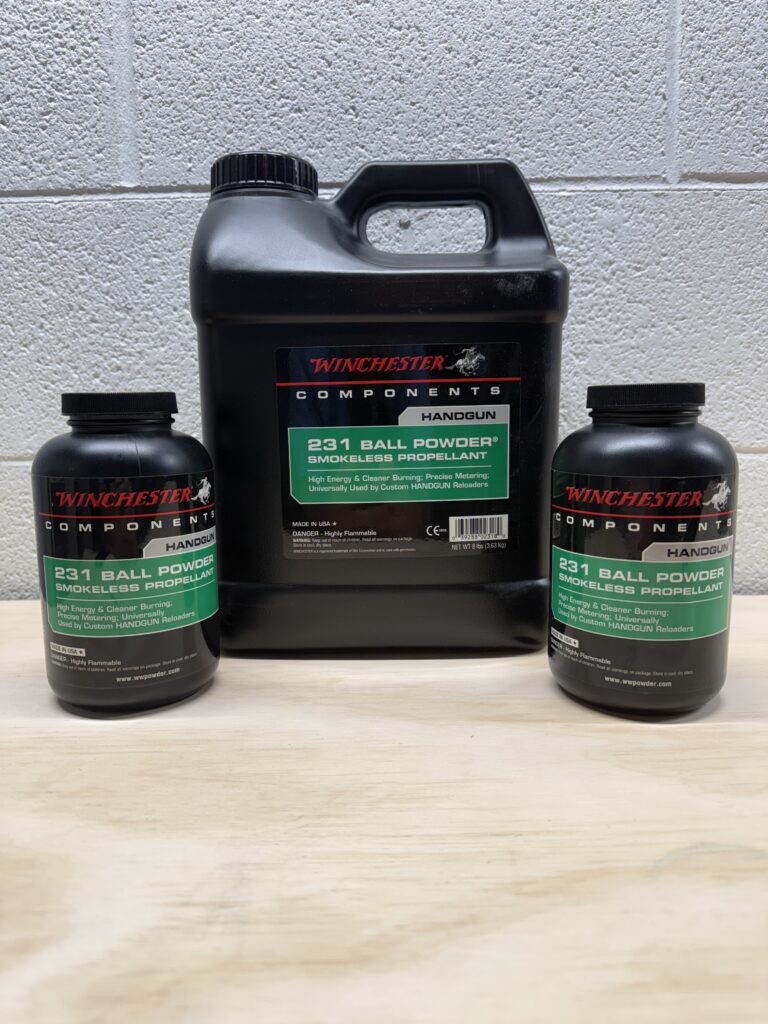
Now you might find yourself thinking, “geez Chuck, with all the 38 ammo out there, and for how long the cartridge has been in production, and with all the guns chambered for it, what could you possibly have in mind that is not being produced somewhere?”. And that is an excellent point. Allow me a moment to set some parameters. What I wanted was a higher velocity (higher than the industry standard of ~850 FPS) 158 grain, round nose or Semi-Wadcutter, that was accurate, cost-effective, but was mild enough that it is not going to wear you out if you are shooting all day long. Several of these parameters were not hard to meet with 38 Spl. The sweeping majority of 38s are quite mild and have a minimal chance of wearing out the average shooter. Also, both round nose and semi-wadcutter are rather prevalent with the 38. The thing that made this desired load a bit of a challenge was creating an accurate, affordable load that was more than the average +P load. In my inventory of pistol powder, I have a fair stock of Winchester 231, Hodgdon HS-6, and Hodgdon Tite-Group, and I truly had no desire to go buy all new powder when I had a fair stock already. Both the HS-6 and Time-Group have performed well for me out of the 357 Magnum cartridge. And I place them in a category of load that I call the “all day magnum” (more on this in a coming series). The short explanation is having a fairly hot magnum load that can be shot for a full session, and not wear out the shooter or tear the gun apart. But enough on that, we need to find a load to use with this W-231.
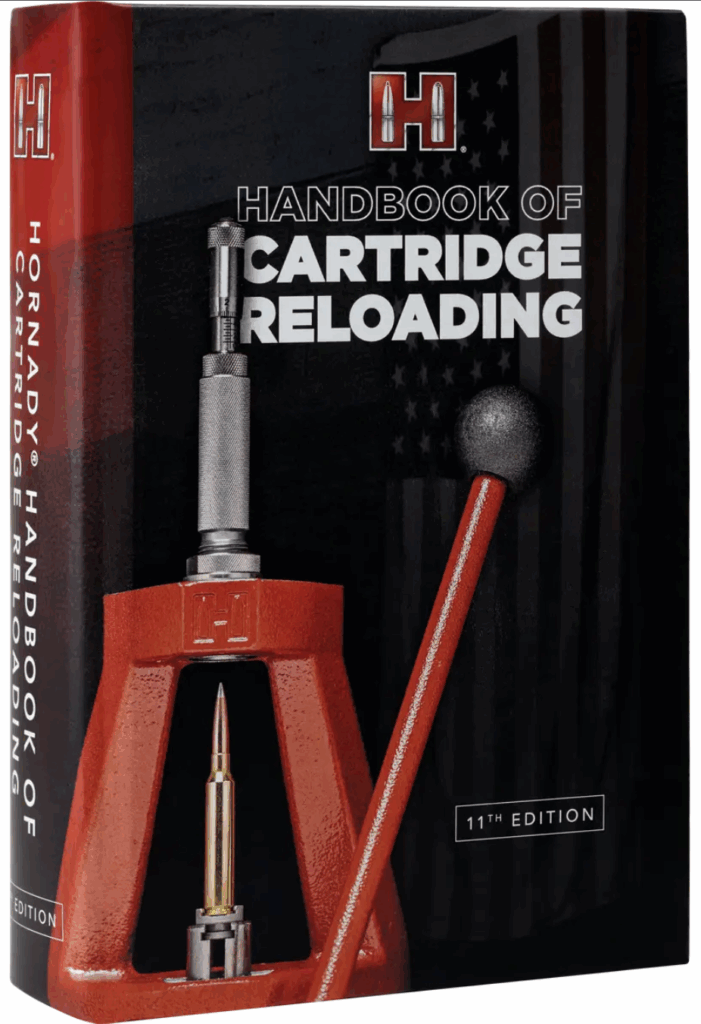
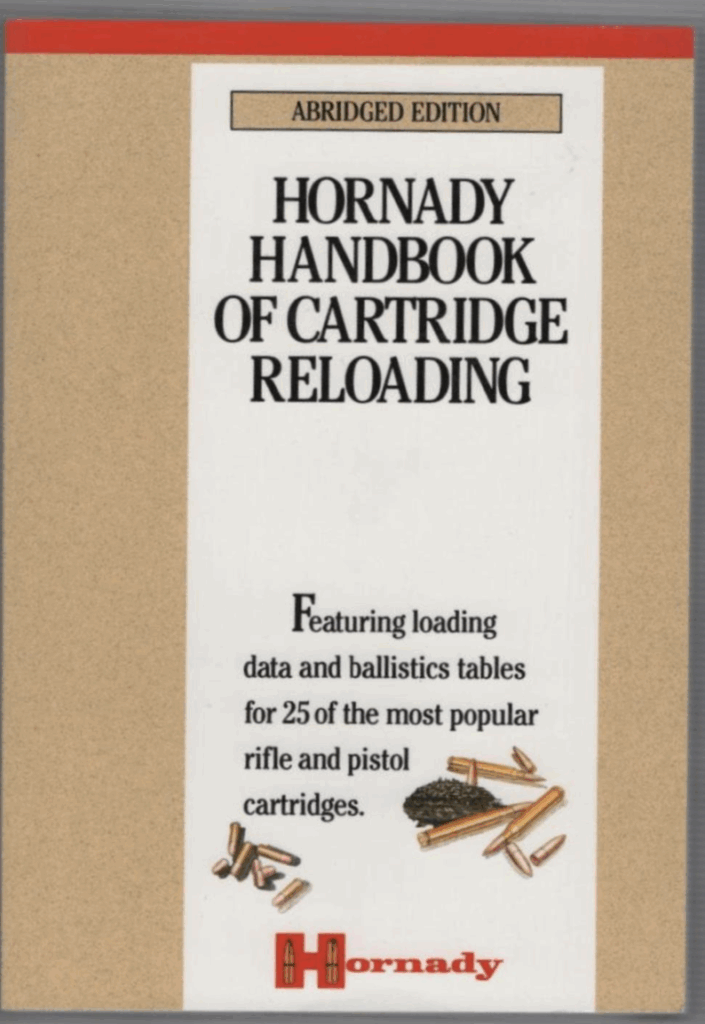
The first place we need to look is in some reloading data books. I always recommend, regardless of how experienced a handloader you may be, that you always have load data resources on hand. And you will notice that I say “resources” not “resource”. For those of us who have been reloading for a while, we know that load resources do not always agree with one another. While some resources list different bullets and powders, I have also seen load data references that list the same bullets and powders that list completely different powder charges for both minimum and maximum charges. So I always like to have a few different resources to compare. The first two that I use are Hornady load manuals. When I still shot a lot of 308 Winchester, I almost exclusively used Hornady bullets, so it was natural to have a Hornady load manual. The first manual was given to me by my uncle when I first started loading. It is a Hornady Abridged Edition made in the early 90s. It is still a good manual, and a lot of my original hand-loads were developed using that manual. After a while, I got concerned that maybe my data was a little out of date, so I went to my local gun shop and picked up the latest Hornady manual, which happened to be the 11th edition.
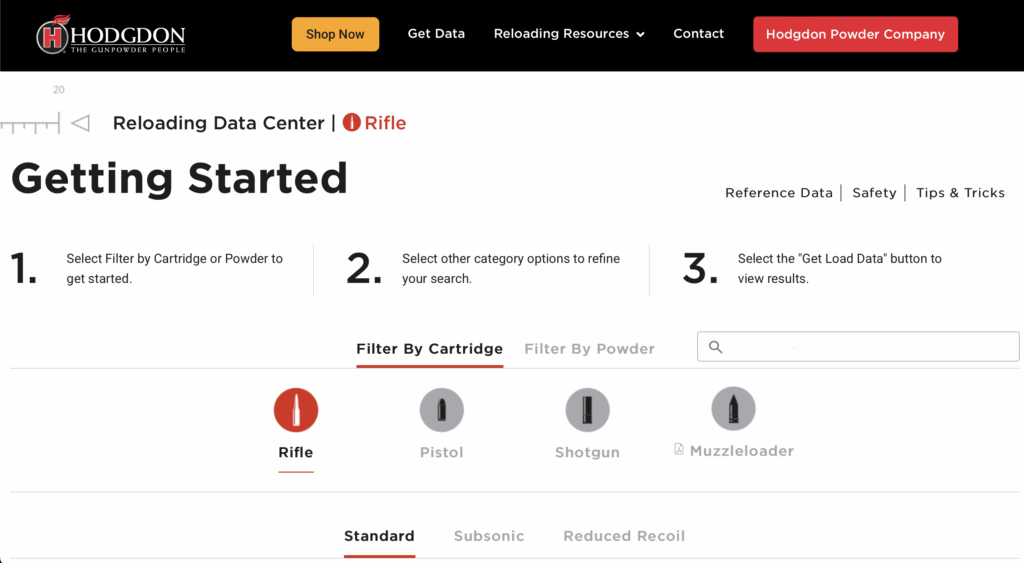
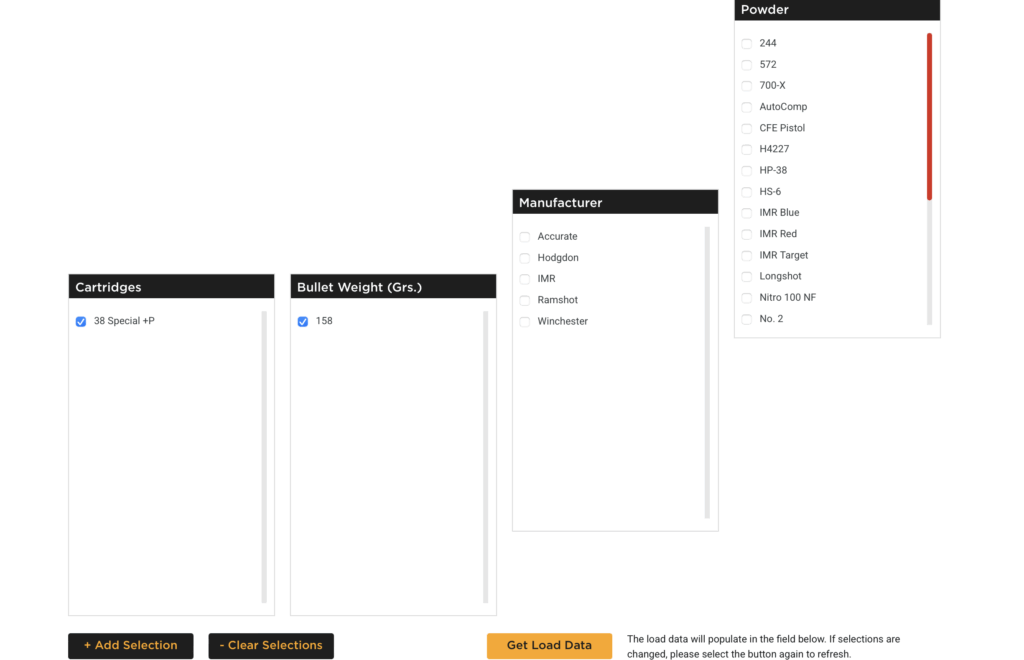
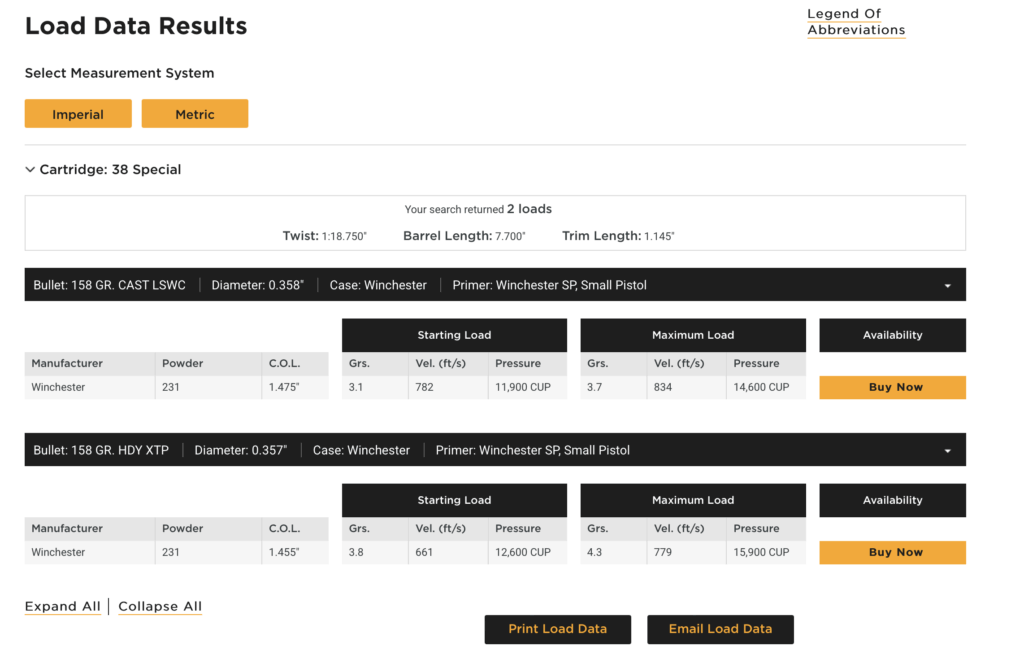
The third resource I like to use also happens to be a free online resource. It is the Hodgdon Reloading Data Center, which can be found on Hodgdon’s website. It offers the ability to choose Rifle, Pistol, Shotgun, and Muzzleloading data. Of course, because it is a Hodgdon manual, you only see their powder selection. But that still leaves you with options from Hodgdon, Winchester, IMR, Accurate, and Ramshot powders. It works great for me because the bulk of the powders that I keep on hand are Hodgdon, IMR or Winchester. And I don’t see that changing any time soon due to the lack of availability of Alliant powder. The Loading Data Center affords the choices of cartridge, bullet weight, manufacturer, and individual powders. Once you make your selections, just hit “Get Load Data” and you are off to the races.
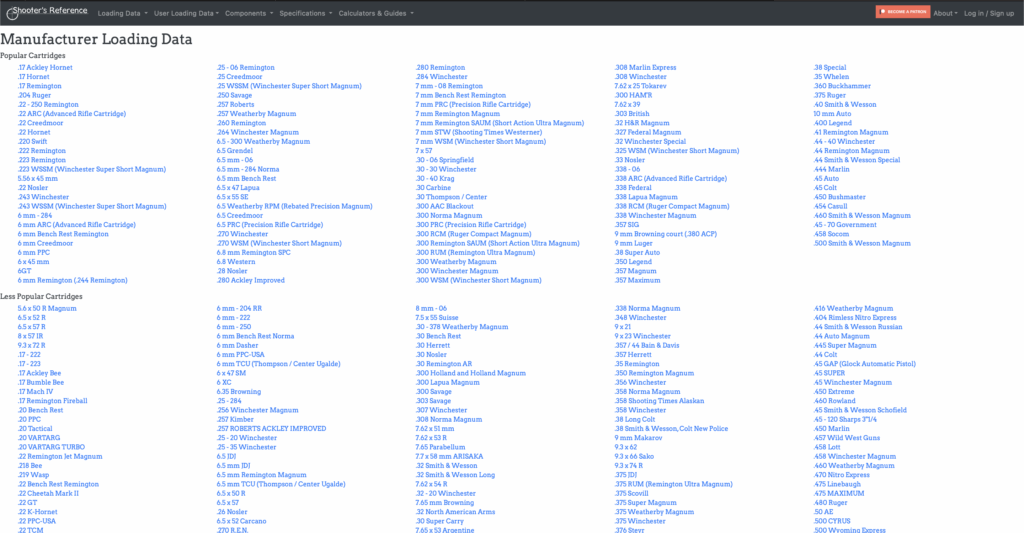
This is just some of the list of cartridges that Shooters Reference has to offer. There are so many they don’t all fit on one page!
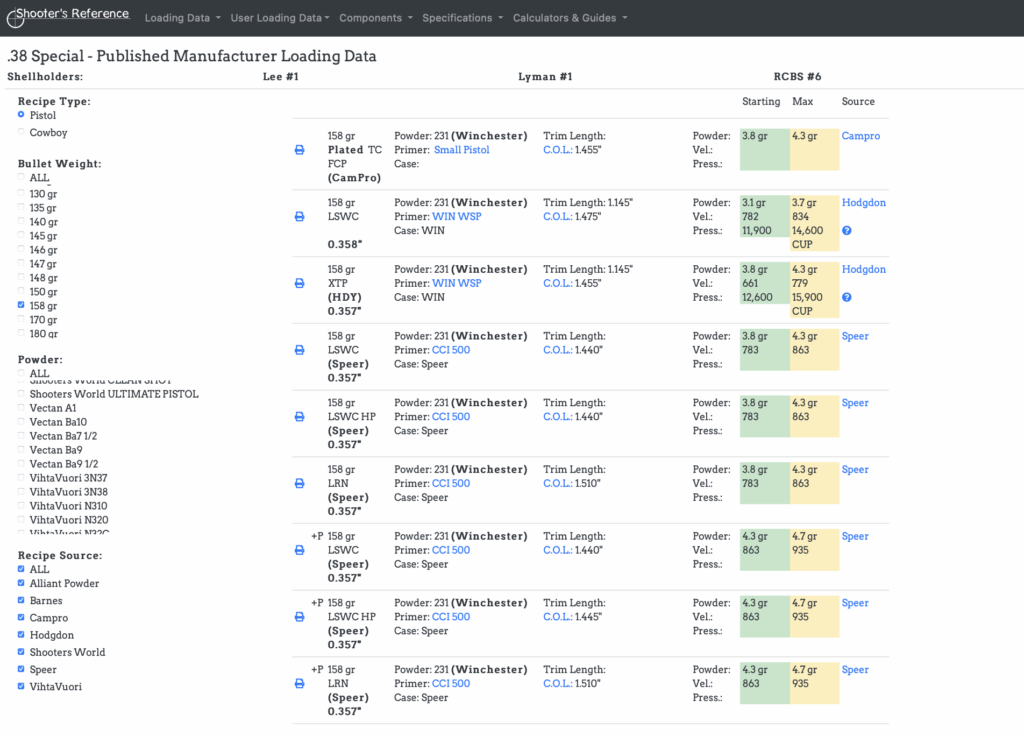
And my last resource that I regularly use is a website called Shooters Reference. This is independent of any powder, bullet, or component manufacturer, which allows them to post a wide variety of load data. All recipes that are listed also show their source, so if you are skeptical or have questions, you can just look up the source. I have Shooters Reference to be an excellent source, regardless of whether the cartridge is popular or more obscure. It is where I am currently pulling data from for some 35 Remington handloads that I am working on. And for those of you who also enjoy the 35 Rem. I will be posting articles on that as well, so stay tuned.
Know that we know what type of load I want and where we are going to find the data, let’s get down to the process. To start, we will go over brass. The 38 brass that I used was range pick up from a local indoor range that I go to on occasion. It is a random assortment of headstamps, but it is all only 38 special. I take the brass and full-length size it, trim it on my Lyman Universal Trimmer, chamfer and deburr, and then wet tumble it with stainless steel media with some brass detergent. Once it is done in the wet tumbler, it goes into the brass dryer, which is essentially a glorified food dehydrator. After the brass is processed, it is on to the loading process.
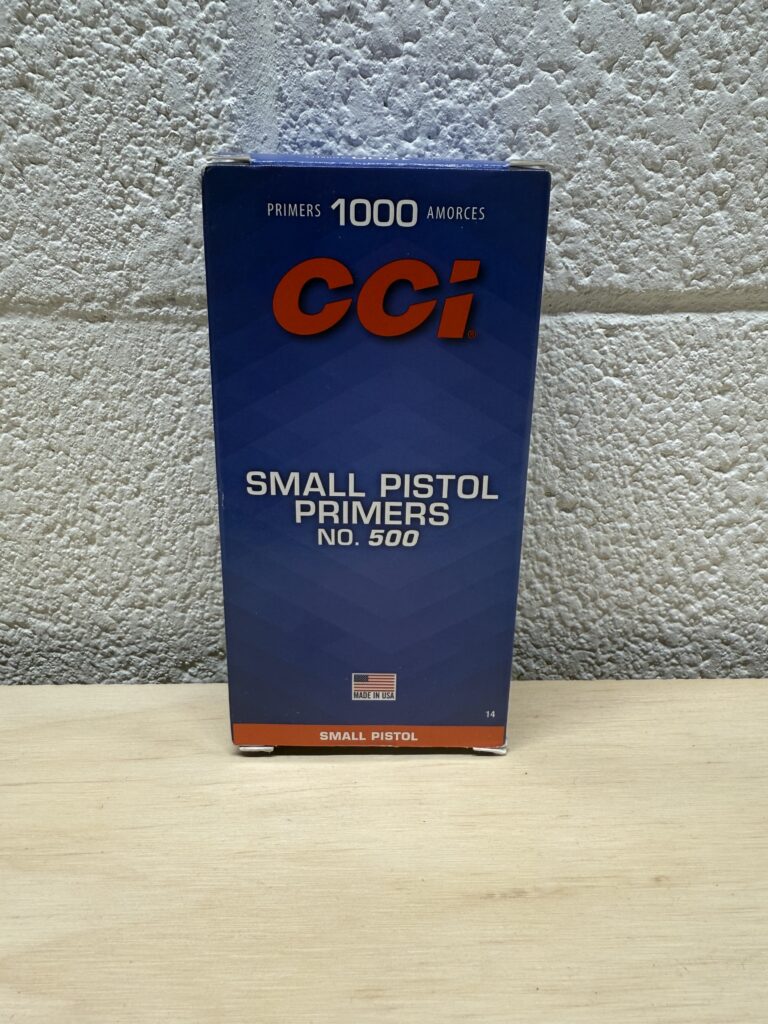
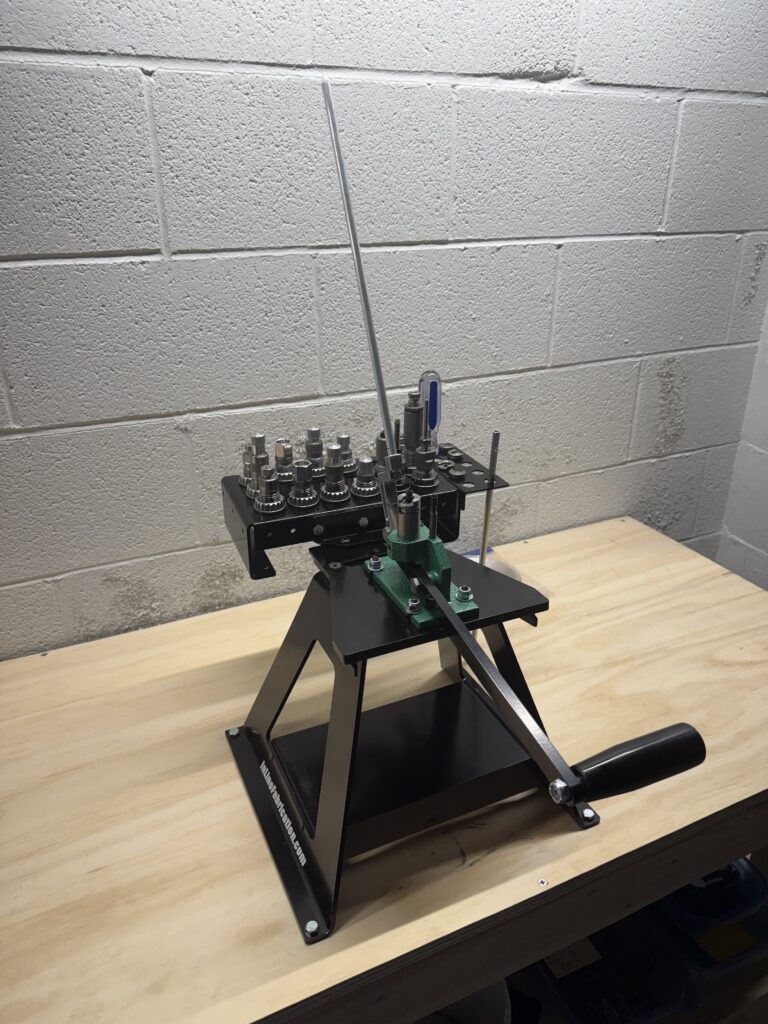
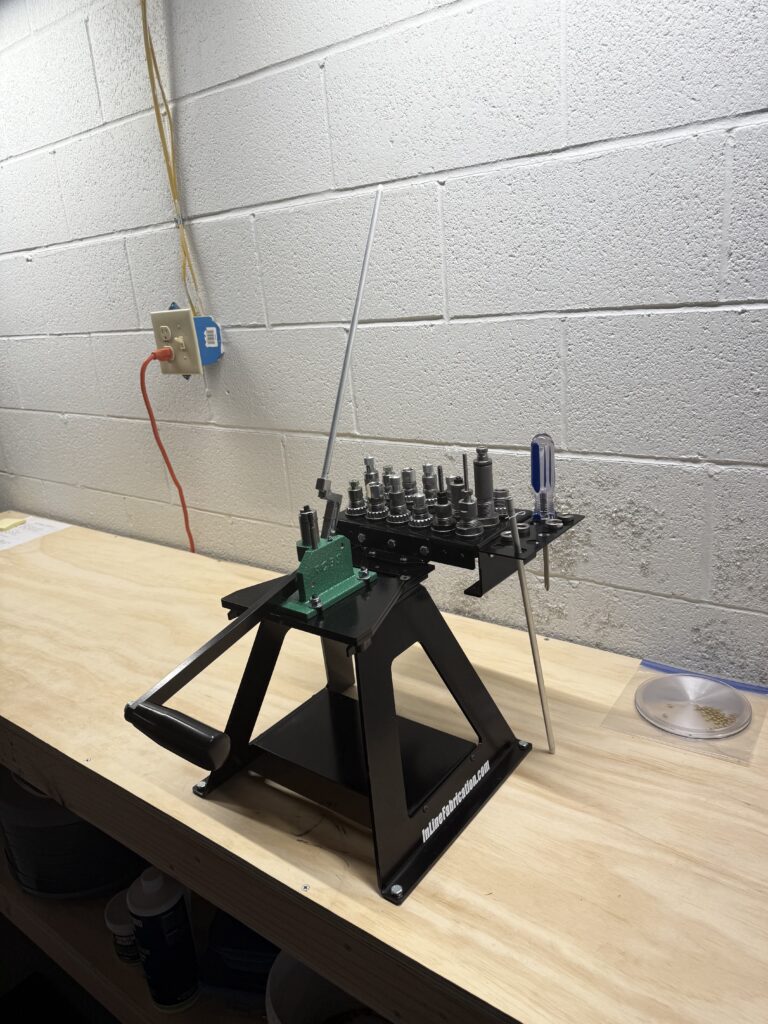
To prime the cases, I used CCI NO. 500 Small Pistol Primers. I have used CCI primers for many years. CCI were the first primers I bought years ago for my first hand-load, which was a 22-250 Remington. To prime, I use the RCBS Bench Primer, which is mounted to a quick-change plate from Inline Fabrication so that I can use it on my Ultramount. The bench primer has become my favorite priming method. I used to use the RCBS hand primer, which definitely works, but can fatigue the loader during a longer load session. So the bench primer is the new choice, and the mount on the Ultramount makes it so much better. I also have my bench primer outfitted with the ergonomic handle from Inline Fab. It replaces the standard lever with a roller handle. Is it a necessary upgrade? No. But if you have the coin available, it is definitely worth the investment.
And now it is time to get into what we have all been waiting for, the powder charge. On a prior range trip, I had already tested the published load data for W-231 with a 158-grain bullet. So while you will not see that page of load development featured in this article, go forth knowing it was tested. And again, for those who missed it, we always follow safe loading procedures, even when working outside of published load data. The charges that were tested were 5.0gn, 5.6gn, and 6.0gn. This was after the 4.3gn and 4.7gn charges that are listed in the published data. So in total, this load had 5 incremental steps, even though you will only see 3 featured here. For those on the impatient side, feel free to scroll to the bottom of this article, where I have all the load data written out.
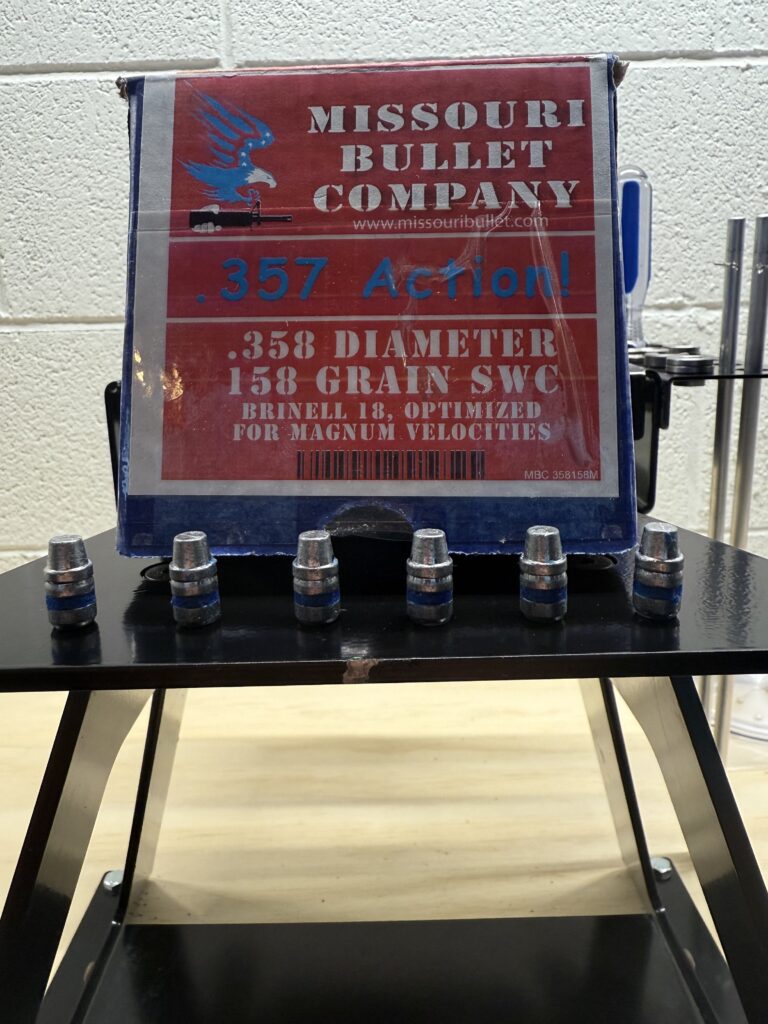
And to top things off, I used a 158-grain Semi-Wadcutter. The bullet I used is from the Missouri Bullet Company. It is their 38c .357 ACTION! .358 SWC. The special thing about this bullet is that it has a Brinell Hardness Number of 18. They put right on the box that these bullets are optimized for magnum velocities. And while I have shot them at magnum velocities, I have also found them to perform exceptionally well at standard pressures, as we see in this particular case. I get them from Graf and Sons. And I will go ahead and throw out this disclaimer. I am not sponsored by anybody. All products that you see featured on the project were purchased by me or a member of the team. I state the names of these products because they work for us, and I want to share what works for us, with you all. I am NOT paid or compensated for any of these products. Free advertising galore here.
For all load development, a factory configuration Smith and Wesson Model 686 No Dash with a 4-inch barrel was used, and the single-action trigger was employed. Published velocities are from the muzzle and were obtained using an Athlon Range Craft Doppler radar chronograph. Accuracy was tested at 25 yards. The shooting position was standing with the gun resting on a pickup truck bed rail.
- 5.0gn Winchester 231 Ball
- Minimum- 905 FPS
- Maximum- 947 FPS
- Average- 929 FPS
- Standard Deviation- 14 FPS
- Extreme Spread- 42 FPS
By my standards for a revolver load, this performed quite well. Accuracy was acceptable; however, further accuracy testing will need to be conducted with a rest, as I do not find that my hands resting on a truck bed are as steady as a rest. However, for those days testing, this was absolutely a great load, with far greater consistency than what is seen from many factory loads. Let’s look at our next charge.
- 5.6gn Winchester 231 Ball
- Minimum- 990 FPS
- Maximum- 1039 FPS
- Average- 929 FPS
- Standard Deviation- 14 FPS
- Extreme Spread- 59 FPS
While the 5.6 grain charge did increase our velocities, that is about all it did. We can see both our standard deviation and extreme spread open up. While it did not increase to an unacceptable level, it is still a step in the wrong direction. In my opinion the gain in velocity is not worth it for this particular load. Not a bad load, but better is out there. On to our highest charge.
- 6.0gn Winchester 231 Ball
- Minimum- 1086 FPS
- Maximum- 1101 FPS
- Average- 1093 FPS
- Standard Deviation- 6 FPS
- Extreme Spread- 15 FPS
No, folks, that is not a typo. We found a 38 Special loading that boasts a SD of 6 FPS and a ES of 15 FPS. I would be thrilled with those numbers from a precision rifle reload. But I am elated with those numbers from a standard 38 Spl load. I do not know about you all, but for me, those numbers are almost unheard of in a pistol cartridge. And for the range conditions of having no rest, the fact that I was able to achieve a 3.4-inch 5-shot group at 25 yards is phenomenal. And yes, I checked the chronograph to ensure that I did not read it wrong. And I had two other shooters read it as well. It is not a misread, it is not a misprint. It is just the most consistent pistol load I have ever seen. Now I will fully admit that it was only one 5-round group, fired on one day, with one gun. And for curiosity’s sake, we will be revisiting this load at our next range trip in a couple of weeks, firing from barrel lengths 2-6 inches as well as guns chambered both for 38 Special only and 38/357 guns. With results like this, it is impossible not to revisit this. Should this load prove to be consistent across further testing, I believe I will have just found my ideal K-frame load. But why do I need a K-frame specific load?
The K frame is one of my favorite guns of all time, but it has one big flaw in my mind. And that is the fact it does not handle steady diets of 357 Magnum well. And while the 38 Special is a fantastic cartridge, and has been proven to be incredibly effective for anti personnel purposes over the past century, in my opinion most loads are more on the anemic side. So to have and accurate, relatively powerful load, that is cheap enough that it can be practiced with frequently without a second mortgage is a noteworthy accomplishment. And while talking about accuracy, here is the target.
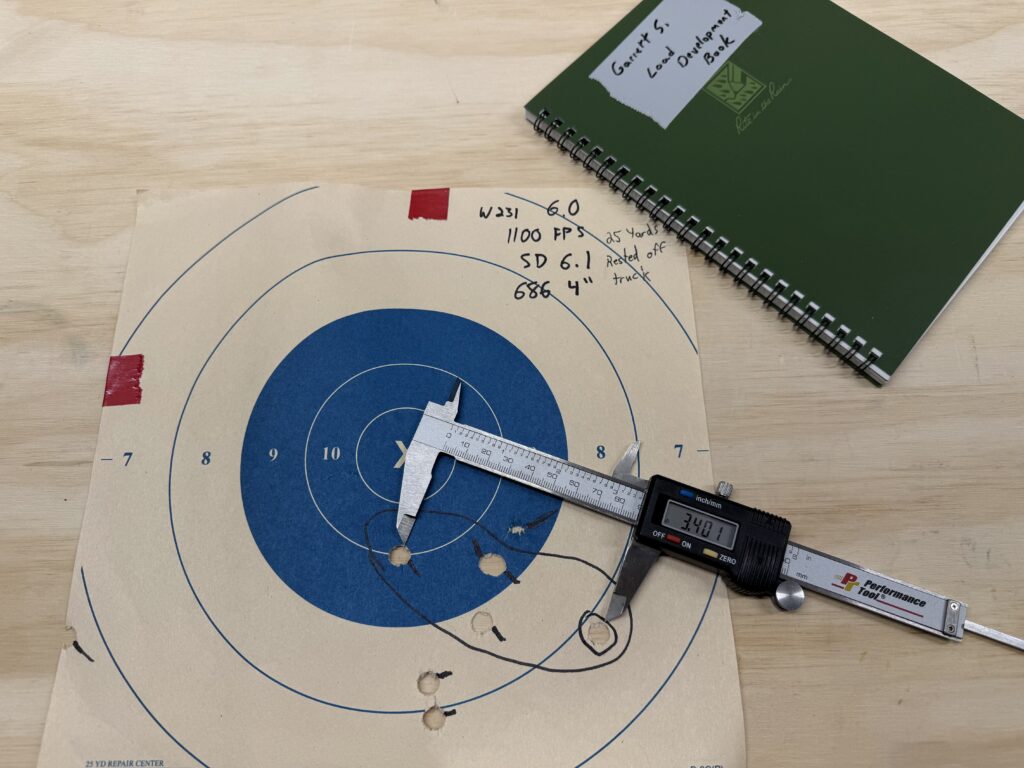
Notice the one hole is actually two shots, which accounts for the 5 shots fired. Disregard the other holes, they were from another loading
We will be revisiting this load in the very near future, but for now, I am incredibly pleased with this. I do believe I have found a place for all my W-231 powder. And in the interest of keeping with the theme of the project, we have definitely “found what works” for a 38 Special loading.
LOAD DETAILS
- Brass- Range pick up, trimmed to 1.145 inches
- Primer- CCI NO. 500 Small Pistol Primers
- Powder- 6.0 Grains Winchester 231 Ball
- Bullet- Missouri Bullet Company 38c .357 ACTION! .358 158 grain Semi-Wadcutter 18 BHN
- Crimp- LEE Factory Crimp Die set to manufacturer settings for a roll crimp
- Cartridge Overall Length- 1.455 inches
- Cost Per Round- Approximatly 20 cents
Friends, I have one more thing for you. As you can see, this load clearly works well for us. But I would love to know what works well for you. Do you have a favorite, accurate, cost-effective round for the 38 Special? If you have an excellent use for W-231 powder I would love to hear it! Head down to the comments and let me know what is on your mind.
Until next time
Chuck