

In a world full of high capacity, detachable box magazine arms, allow me to introduce you to something you may not have thought about
Some years ago, when I was learning to shoot on that old Model 14-3 Target Masterpiece, that was all I knew. My dad had a Ruger SR9, and while I did shoot it, I never developed quite the fondness for that SR9 that I had for the Smith revolvers. Now I will be the first to say that the SR9 is a wonderful handgun. I have found it to be reliable, intuitive, and accurate, just as we expect our modern auto-loading pistols to be. It would be another 10 years before I bought my first autoloading pistol. That was a 1911. A Kimber 4-inch, 45 auto. While magazine changes were easy, I didn’t see too much benefit. I went from 6 rounds of 38 Special to 8 rounds of 45 Auto. For me, I could shoot the 38 a little quicker than I could the 45. And with modern defensive ammunition, I did not feel like the 45 gave me a large advantage in lethality and stopping power. Yes, the magazine change was easy to adapt to; I had been using speed loaders for years. I was just as quick with the speed loader as I was with the magazine. I should also point out that when I practice and perform reloads, I do not do it for competition-level speeds; I do it to make sure that I get the gun reloaded efficiently and effectively. So there are people who could easily beat my speeds with either reload. At the time, I could find 45 locally a little easier than I could find 38, and with the price of each being similar, I stuck to shooting 45. I shot and carried that gun for the next several years
It was one day during a conversation with my uncle, the man responsible for a lot of my shooting performance and knowledge, when we got into a discussion of the Glock handgun. He carried a Glock as a Deputy, while on the SWAT team, and during his time off duty. He is also just as fond of the Smith and Wesson revolver as I am. But he did have to admit that a Glock was the most practical choice for him and his needs at the time. I told him that while I had shot a couple of Glock handguns, I did not shoot them as well as my 1911, and I preferred the ergonomics of the 1911 more (and no, this is not me saying “Glocks don’t fit my hand”). He made me a proposition. Buy a Glock 19 and shoot it consistently for 1 year. If by the end of that year I did not like it, he would buy it off of me for what I paid for it. So with virtually nothing to lose, that is what I did. I purchased a new Gen 3 Glock 19, a handful of extra 15-round magazines, and a couple of cases of ammunition. That was my primary practice pistol that year. Dry fire or live fire, if I was shooting, I would be shooting my Glock. It did not take long for me to realize the allure of the Glocks. I fell in love with that gun long before the year was over. Needless to say, my uncle did not end up buying that gun. I bought several more Glocks after that. I couldn’t deny that the Glock was one of the best pistols I had ever shot. I never did quite develop the bullseye accuracy with the Glock that I have with a Smith, but I had far more than “acceptable combat accuracy”. I could consistently engage an 8-inch circle target from the muzzle out to 25 yards, only rarely dropping a shot at 25 yards. And I found that to be plenty for the type of shooting I do.
For the next 4-5 years, I shot primarily Glocks. I had a couple of Smith revolvers, but I had fallen so deeply into the Glock platform it was just what I shot. And with the added benefit of 9mm being roughly half the price of 38 Special and 45, I did not need my arm twisted to opt for my 19. However, one day I decided to take the Model 14 out just for fun. I had 3-4 boxes of 38 Spl that had just been sitting for a few years and needed to be shot. I went to the range and did a few warm-up drills of some of the combat drills I would shoot with my Glock. After I was feeling confident with the old gun, I moved the target out to 25 yards. With my target set, I got into a stance and fired. And for those wondering, I shot in a modified Weaver stance. And before you begin to criticize me for being a “Fudd” or using a bad stance, I never had trouble with the stance I used as a boxer, which is remarkably close to a Weaver stance, so I’ll keep my “Fudd” stance. I brought the target back and was blown away. I had shot one of the best groups I had ever fired with a handgun at that distance, pistol or revolver. So I hung a new target, tried again, and achieved an incredibly similar result. I reached into my range bag and grabbed a handful of speed loaders. And while I was not as quick as I was several years before, I still was not horrifically slow. To this day, that trip is one of my favorites, and I think of it often. So from then on, I would take two guns to the range. One of my Glocks, and one of my Smiths. And I saw great success with both platforms. But something quickly became apparent. After a fair amount of practice, I had virtually no difference in reload time, and my accuracy was still better with the revolver. Now, some of you may be wondering how my accuracy was better on a gun that had a trigger 4 pounds heavier. Which is the same thought that I had. And this goes to prove that trigger weight is not the only contributing factor to a serviceable, smooth, and consistent trigger. But not all was lost for my polymer wonder nine either. While I did not shoot the 19 better than the Smith, I was now shooting the Glock better than before. My consistency had drastically improved.
So was it luck? Was it chance? Maybe it was just a fluke? Not a chance. Ever since I started shooting my revolvers and autos together, my accuracy has consistently improved, little by little. And it has done so at a greater rate of speed than what was occurring when only shooting autos. This gave me enough evidence to believe that things shouldn’t be an all-or-nothing situation. That diversity in platforms can aid in shooting performance, to a point. One can have so many different styles of guns that they never truly master any of them. But in my case, I was primarily shooting two types. The K frame Smith and Wesson, and the mid-size Glock 9mm. One thing that I believe I benefit from is the heavier trigger on the revolver. Generally speaking, autoloaders have a 5-6 pound factory trigger, while most revolvers can have anywhere between a 8-12 pound factory double action trigger. And for today, double action is all I am referencing. Single action has its times and places, but I believe those times and places are not in combat shooting. The heavier trigger helps to develop muscle and control in the hand and trigger finger. And if you truly want to be humbled, shoot with your non-dominant hand, single-handed, with a revolver, at anything over 15 yards. This is the definition of “humbling”. Especially over long periods of time. Again, generally speaking, a revolver trigger has a pretty consistent weight through the stroke of the trigger. This is not so on our beloved autos. It is quite common to find autos that resemble a 2 stage trigger, similar to that on an AR-15. There is normally a lighter first part of the press, a wall, and then enough pressure to break through the wall. Due to the consistently heavier weight of the revolver trigger, we get better at controlling heavier weights through the entire manipulation of the trigger. And of course, the manipulations are two different movements. You may have noticed that I used the word “stroke” to describe pulling the trigger on a revolver, and the word “press” for the auto. This is some terminology I picked up from a man well-known to our industry, Clint Smith. For those unfamiliar with Clint and his team, I cannot recommend checking them out enough. Clint is one of the most, if not THE most, renowned teachers of the use of firearms. One of the reasons I love Clint’s methodology is that he frequently states, “the school isn’t about shooting, it’s about thinking”. Sometimes we get so wrapped up in shooting, we forget to use our greatest tool of them all, the one between our ears. But now I am getting off topic.
So we know that the revolver trigger can be a useful training aid, as well as quite accurate on its own. But what are some other benefits? In the realm of training benefits, the reduced capacity can also help. Most revolvers that are intended for concealed carry or combat-type use typically have a capacity of 5 to 7 rounds, depending on frame size and choice of chambering. Many people frequently cite this as a downside for a carry gun. And whether or not it is, is a debate for another time. But one thing that can be a benefit of the capacity issue is the increase in frequency of reloading. While the same thing COULD be achieved by downloading your magazines to a lower capacity, I don’t see too many folks doing that. I am not saying that nobody does it, but few do. And I myself am guilty of that. When I take my Glocks to the range, I pull several magazines from my ammo cans that I store them in. I store these magazines, fully loaded in sealed ammo cans. So I just use those magazines as they are. Now this is a knock on my personal regimen. I should be downloading those mags so that I get the same benefit. But shame on me for not doing it. I haven’t met too many people who can reload a revolver quickly, who couldn’t also reload a pistol within an acceptable amount of time, at least with some practice.
The Downsides of it All
The revolver can be a fantastic carry gun, as well as a training aid, but as with all things, it is not perfect. One of the major downsides of many revolvers, both as a carry gun and in training, is the rudimentary sights. For carry, this should be obvious. In combat shooting, we want to have a good sight picture so we know where we are shooting (of course, the sight picture will be under duress, but hopefully you get my point). In training, we want to have an excellent sight picture. We already know that under duress, the sight picture will degrade to some degree, so to combat this, high standards of accuracy should be maintained in practice. But many revolvers have crude sights that are not adjustable, and often are the same finish as the rest of the gun. Many of us have been using nail polish or sight paint for years, but even that is not the same quality as a tritium, fiber optic, or gold bead sight. This has started to be remedied over the past few years. Many companies are coming out with revolvers with fantastic sights on them. A few honorable mentions are the Ruger SP101, Kimber K6-S, and the new Smith and Wesson Ultimate Carry line (as I write this, I have plans to pick one of these up when they come back in stock, so look for a coming series on that gun. Shocker, another Smith and Wesson on the project). While these sights are not always adjustable for elevation, many of them can be adjusted for windage, and at the ranges we plan to use these, combined with the factory sight regulation, this SHOULD provide ample accuracy for our purposes. Even though many of these newer guns are coming with enhanced sights, there are still far more carry revolvers with sights that are less than optimal. I know both of my J frames have sights that are not what I would prefer to have. And while they are not my preference, they are still serviceable. A carry gun should have three things, regardless of what type of gun it is. The first being reliability. It doesn’t matter how smoking your gun may be, if the moment you need it, you get a “click” instead of a “bang”. The second thing is a “serviceable” trigger. This can be different for some folks. But essentially, all this means is a trigger that can be used effectively without hindering the shooter’s accuracy. And the third thing is sights that can be seen by the shooter. This is another thing that can vary greatly depending on the shooter’s eyes. Some people have no problem whatsoever using a gun with crude sights, with just a little nail polish on the front. And while I can do that myself, I much prefer a plain rear, with some sort of high-visibility front sight. I am not too particular as to whether the sight is tritium, fiber optic, or a gold bead. Gold beads tend to be my favorite, but tritium also boasts a significant advantage.
Is This Applicable Outside of Handguns?
Of course it is! As frequent visitors to the project know, I am a big fan of lever-action rifles. They feature actions that are quick and handy to manipulate, a good “heavy-hitting” chambering, and with modern aftermarket support, you can have whatever sights or optics you prefer. While not as fast as an AR, lever actions are still plenty quick to use. But there is a huge benefit of many revolvers and lever guns for a lot of people. While I cannot quote every gun law in every jurisdiction of the United States, or the rest of the world, many people have certain capacity or feature restrictions. And the sweeping majority of revolvers and lever guns naturally are not affected by these regulations. So for someone living in one of these jurisdictions, they could go out and buy both a rifle and revolver chambered in something like 38 Special or 357 Magnum, only have to buy one cartridge, and they are off to the races. And for home defense, for those wanting a long gun and a handgun, one could use their 38 carry revolver, in conjunction with a 38 lever gun, and have a lethal, effective, low-recoil system that is most likely not affected by most common gun laws here in the states. Now, for me, I do not live in an area that has these senseless gun laws, so I get to use what I want. However, I do travel, and sometimes I am in an area that does have these restrictions. While I understand people who just carry their regular load out into these areas, this is not something I recommend. It is far more likely to end up in some legal snafu over getting caught with these “illegal” platforms, rather than to actually need to employ them in a fight. And your carry gun does you no good as a life-saving tool if it winds up costing you $100,000 and a 10-year felony sentence in prison. You may feel differently, and that is your right to do so, but that is just my perspective. My personal favorite combination for this situation is my Winchester 94, and either one of the J frames, or one of my K or L frame 38 or 357s. I feel this provides me with ample firepower and capability for most situations that I may encounter. And if I cannot finish the problem, it should at minimum afford me the ability to make some space and get out of whatever bad situation that I ended up in.
What About Shotguns?
Not only does our theory work for pistols, rifles, and carbines, but it is also applicable to shotguns. Shotguns are excellent tools that bring an unparalleled level of versatility to the table. Most typically, when someone references a shotgun, they have one of two action types, either a hinge action or a pump action. Yes, I am aware that semi-auto and lever-action shotguns do exist, and some models are quite prevalent. In my experience, the hinge and pump actions are far and away the most common. With a single-barreled hinge action, the process is quite simple. If you shoot, you must reload. The only variable is if your particular gun has an internal or external hammer, and whether or not the gun has a safety, and if that safety automatically resets after the action is opened. Of course, the double-barreled is almost identical, with the only exception being the opportunity to fire two shots before reloading, and the possibility of two external hammers. But the pump shotgun is another animal. Most pump actions hold between three to eight rounds. Some do exist outside of that spectrum, but we will focus on what is most common. Also, some pump-action shotguns feature a detachable box magazine. But those are far less common, and I have virtually no experience with those models outside of firing a handful of rounds when I saw one at the range. For today, we will focus on this variety of pump gun, a 12 Gauge, pump, with a capacity between 3-8 rounds, and the assumption that multiple barrels are readily available and swappable when the need arises.
The first gun I ever bought with my own money was when I was 12 years old. It was a Remington 870 Super Magnum with both a field barrel and a rifled “deer” barrel. If memory serves correctly, the field barrel is a 26″ 3.5 inch cambering, and the deer barrel is 18″ with a 3 inch chamber. I saved up my money from mowing lawns, Christmas, and birthdays, and finally had saved enough to purchase my own gun. It was brand new in the box, and it cost me a whopping $218. I was in love with that gun, and to be candid, I still am. I have traipsed all over the deer woods, through the back hill, I took it to trap and skeet ranges, and I shot a handful of local competitions with it. That gun, for a long time, was my personal favorite for pheasant hunting. For that role, it has since been replaced by a CZ Drake Over Under hinge action chambered in 28 Gauge, but that is a story for another day. When my 870 was equipped with a shorter barrel, it was my favorite for home defense and some combat drills on the range. And all of us who use a pump gun need to remember one thing: if you are shooting, you are loading. Very similar to a lever action, you have a relatively low-capacity gun that can only be reloaded one at a time. I do know about some competition shotgun reloading techniques, but those are impractical for the bump in the night. I highly doubt anyone is putting on their gym shorts, grabbing their shotgun, and throwing on the wiz bang competition belt at the same time. But hey, different strokes for different folks, and if that is part of your home defense plan, who am I to tell you that you are wrong?
My favorite way to feed my pump gun is with a velcro side saddle. I use the 7-round shotgun “cards” from Esstac, but others are available; but I have never felt a need to change. The Esstac cards just flat out work. There are other options for those who are uncomfortable with velcro. One being the fixed side saddle, and the other being a hard side saddle with interchangeable “cards” like this one from Aridus Industries. But we can get into those another day.
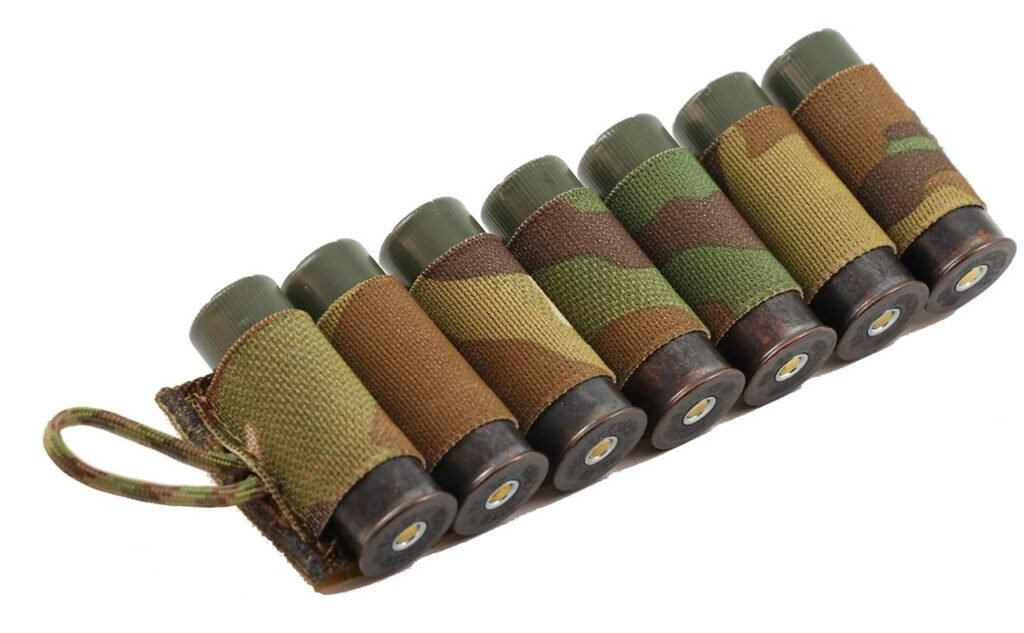
When running a pump gun, or a lever gun, whatever you shoot, you should then reload after that moment of shooting is over and the situation allows it. If you practice much with either system, it doesn’t take horribly long to become proficient with either platform. The main difference is which hand you load with, and the fact that most shotguns load from the bottom, and most lever guns load from the right side.
While the modern “high capacity” systems definitely have a place in many applications, that does not render the old ways obsolete. Outside of training aids, the old guns are still incredibly viable and do offer some benefits over certain new platforms. But after all, this is my opinion. I would love to know what you think about this. Are the old guns still viable? Or should I just live and let die? Jump down to the comments and let me know what you think.
Until next time
Chuck