
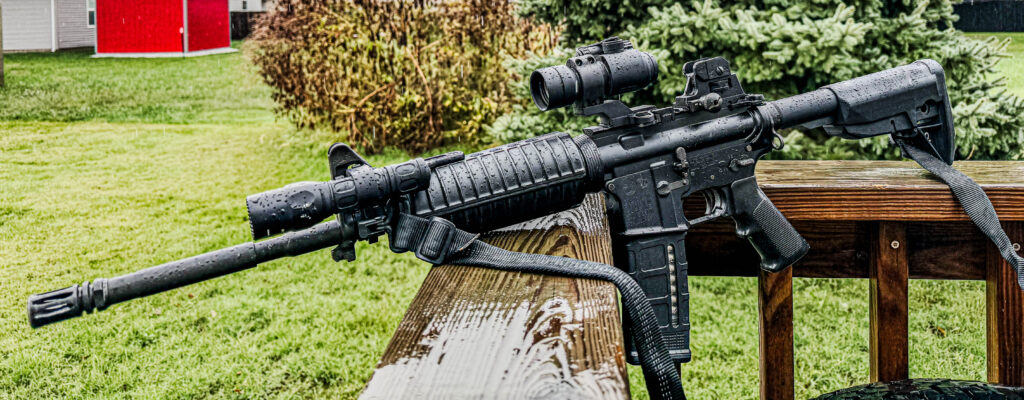
Recently, the question was posed, “What is a good AR-15 for between $700-$1400?” This is a common question that many new gun owners have. Fortunately, there are a plethora of answers to this question. But I want to take this question a step further. I want to address not only the rifle itself but what I would consider to be the “pinnacle of practicality” for the armed citizen. So, without further ado, let’s jump in.
What Makes a Good AR-15?
We are truly living in the golden age of the AR-15. In a time when many excellent rifles can be had for less than $1000. And a market that is flooded with not only rifles, but also aftermarket accessories, it can be hard for many folks to decide what they truly need. For me, I like to keep things simple. Most of us are using these rifles for either home defense, a “life and liberty” gun, or a good all-around rifle. And these roles are all excellently filled by the modern AR platform.
To keep things simple, I want to start with giving you some specifications and features to look for, rather than just throwing out a list of good rifles, since there are so many good rifles that fit this category, it is hard to name them all in one article. First, let’s look at some characteristics of a good carbine.
1.) Reliability. First and foremost, our carbines must be reliable. If they are unreliable, we might as well go ahead and stop now, because none of the rest of this will matter.
2.) Simple. The AR is a relatively simple rifle to begin with. But what I mean is not to tack so many extra attachments on that the rifle becomes an erector set. This is a tool, not a toy. Many attachments are practical, but many are superfluous for our purposes here.
3.) Lightweight. Again, the AR is naturally a light carbine, but oftentimes our creative sides, and our pocketbooks get in the way of this. Keeping things light goes hand in hand with keeping things simple.
4.) Accurate. This means different things to different folks, but allow me to define what it means to me. For our uses, almost any modern, well-built carbine will be plenty accurate enough. I don’t know of too many carbines that are not capable of hitting a torso-sized target at standard home defense distances. It seems popular now for many shooters to say that if their rifle isn’t a 1 MOA (1 inch at 100 yards, 2 inches at 200 yards, etc) then they don’t want it. But I have said this before, and I will keep saying it. Most shooters are not capable of holding 1 inch from a field position. And for our purpose, how well you shoot from a bench is irrelevant. That is, unless you have a bench in your home that you plan to use. A rifle capable of shooting 4-inch groups or less at 100 yards should be more than serviceable for us.
5.) A SERVICEABLE Trigger. Notice the emphasis. Serviceable, not match, not competition, not a 1.5-pound competition trigger, not a binary, none of that. We are looking for 4.5 to 6.5-pound triggers. I will leave the type of trigger up to you. A serviceable trigger is light enough to allow you to hit practical-sized targets without causing you to disturb the rifle to the point of being off target. But there is a massive caveat here. The trigger MUST BE HEAVY ENOUGH to not allow for an accidental discharge for use in our predicted environments. It is far more likely that you trip and fall, bumping your 2-pound match trigger and causing a negligent discharge, rather than needing to take a hostage shot where you need that light of a trigger. I am not here to disparage anyone, but if you cannot shoot a standard trigger between that 4.5-6.5 pound range, the trigger is not the problem; your fundamentals and technique are. I don’t want to be rude, but I do want to be honest.
Sensible Attachments
There is a superfluity of attachments for the modern carbine. Many of them are completely useless or unnecessary; however, I would be remiss if I did not acknowledge and admit that some of them certainly have merit. For me to use an attachment, it must be simple, relatively lightweight, and intuitive. Nothing on your rifle should make it harder to use. If it doesn’t make the rifle easier to use or better for the suited application, ditch it. With that being said, let’s touch on some of those attachments now.
1.) A set of iron sights. These are first and foremost. While the rest of this list is in no specific order, these are first for a reason. Yes, modern optics have come a long way, and yes, I use them, but they do not replace my irons. Also, the batteries in irons do not die, because they are not present. It is far more likely that you forget to change your batteries in your optic, come on target, say “oh crap”, and then lose the fight because you thought the newest wiz bang optics wouldn’t need its batteries changed yet.
2.) A white light. The simpler, the better. I really love the Surefire GX2 Tactical series for this application. They are bright, affordable, and intuitive to use. I don’t need airport runway lights or the homing light from the International Space Station; I just need to identify what I am shooting at. The light you need will depend on your environment. The man in the apartment needs a different light than the man who lives on 40 acres in the middle of nowhere. Look around, try a couple out, whichever ones don’t work out for you can always be sold on something like Tacswap. But seriously, those GX2s are fantastic.
3.) A sling. In the words of Clint Smith, a sling is to a rifle as a holster is to a handgun. Some do not feel the need to have a sling just on a home defense long gun, but with proper training, they can become quite useful.
4.) An optic. This is always constantly under debate, and it seems like every year the trends keep changing. For now, pick what is practical for you. For strictly indoors, a red dot is perfect. But you may need more if you live on a larger property. Only you can decide what is truly right for you. But here are some standards to go by.
- Simple to use
- Durable
- Proven
- Ability to use a quick disconnect mount
Let’s touch on these for a moment. Simple and durable should be pretty self-explanatory. But I do want to preface the last two, proven and QD features. The term “proven” means different things to different people. I like something that has been around for several years, has seen some use in harsh environments, and doesn’t cost $29.99 on Amazon. You do not need to spend thousands on these, but remember, good optics aren’t cheap, and cheap optics aren’t good. There are a lot of new manufacturers on the scene producing what seem to be good-quality optics for very low prices. For me, I would prefer to stick to something a little more proven. Yes, you pay for it, but buy once, cry once. That is strictly my opinion; if yours is different, tell me about it in the comments.
Now, why do I say the ability to use a Quick Detach mount? A couple of reasons. One, if your optic gets dirty or fogs up, you can just ditch it and go straight to the irons. But another reason is image distortion. When looking through an optic, your irons can be slightly distorted. This won’t matter inside a house, but it could matter if using this rifle at some distance. Evaluate your situation, see where you may use this rifle, and decide if this is a feature you may need. If so, go for it; if not, save your money.
Good Options for a Base Carbine
Now I am going to list some rifles. This is in no way a comprehensive list; these are only SOME of the good rifles that are out there. But the reason they made this list is that they are good rifles that I have experience with. If it is on this list, I have owned it, shot it, and trained with it. When I break in my new rifles, that is typically done with 500-1000 rounds of standard 55-grain 5.56 or 223 ammo, depending on ammo availability. However, I do not have an AR on this list that I have not at least put through my break-in process.
1.) The Ruger AR-556. This is a fantastic rifle, made by a reputable company, at an excellent price. The Ruger AR-556 was my first AR-15 rifle. I had the version with a free-floating barrel and rail; however, the standard handguard option is excellent as well, and I do believe it is slightly cheaper. These rifles’ features are those base characteristics that we discussed and have seen use by many civilians and even several law enforcement agencies. A proven rifle, most definitely.
2.) The BCM Carbine. And what I really mean here are BCM carbine uppers. Most of the time, when someone buys a BCM, they buy the upper and then either a BCM or another brand lower. My first BCM was a 14.5-inch, pinned and welded barrel, with a carbine-length gas system. I paired this with an Aero Precision lower. This was a fantastic rifle. I have experience with the BCM lowers as well, and they are just as excellent as the uppers; however, if on a budget, lowers of lower cost and similar quality can be had. And for that purpose, Aero Precision and Palmetto State Armory are excellent choices.
3.) The Smith and Wesson M&P 15 Sport 2. This is an excellent rifle that can often be had for under $700. These rifles are plentiful, well-made, and easy to turn into an excellent carbine. Also, they are quite accurate from the factory, even with the non-free-floated handguards.
4.) Palmetto State Armory AR-15. PSA offers so many different configurations and options that I go cross-eyed looking at all of them. So what I will say is get the basic plain jane rifle. In the past 5 years or so, PSA has really stepped up their quality and quality control, making their rifle an excellent choice. While some of the early rifles may have had issues, it seems to me that all the rifles made in recent years have been nothing but excellent. But I also admit, this is the rifle that I have the least number of rounds on, so I cannot endorse this as heavily as some other options.
5.) Law Enforcement Trade Ins. This, of course, isn’t a brand, but a category. My current carbine that stands at the ready is an older Colt 16-inch carbine, from the “good old days” of Colt. And I got it from Aim Surplus as an LE Trade In. Do not be afraid of these rifles. Many of them have mild to heavy surface wear but are in excellent mechanical condition. The downside to these is that you may have to wait for a few weeks to a few months to get a certain brand, like an older Colt, but they are constantly becoming available for an incredibly reasonable value.
My Choice
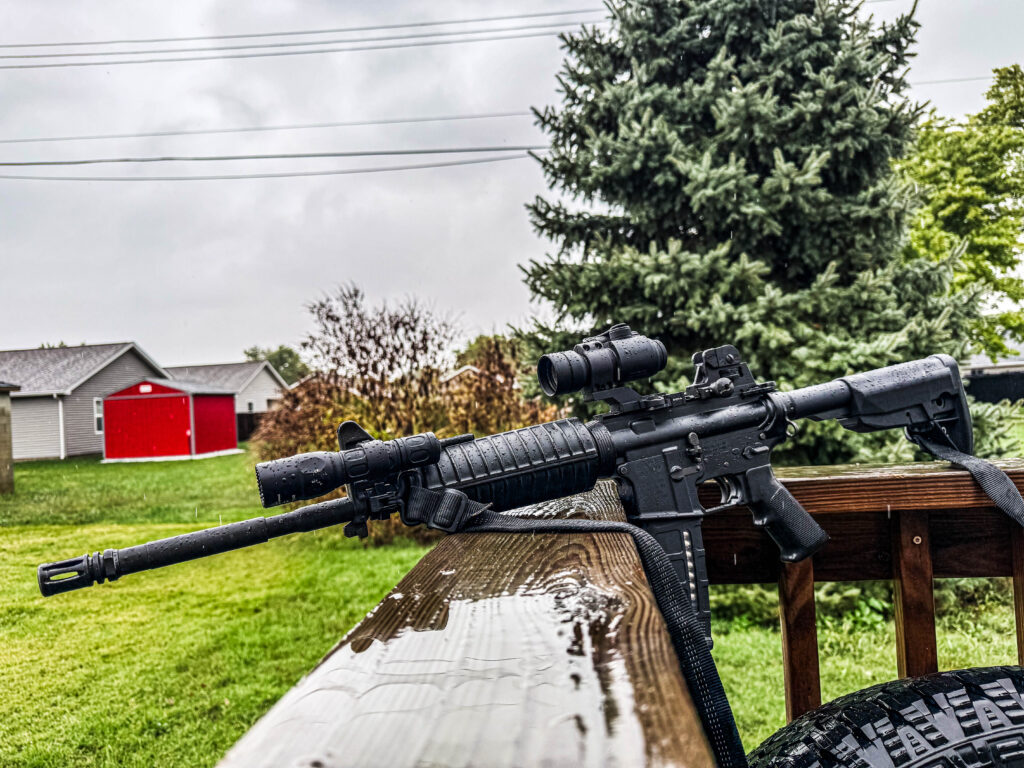
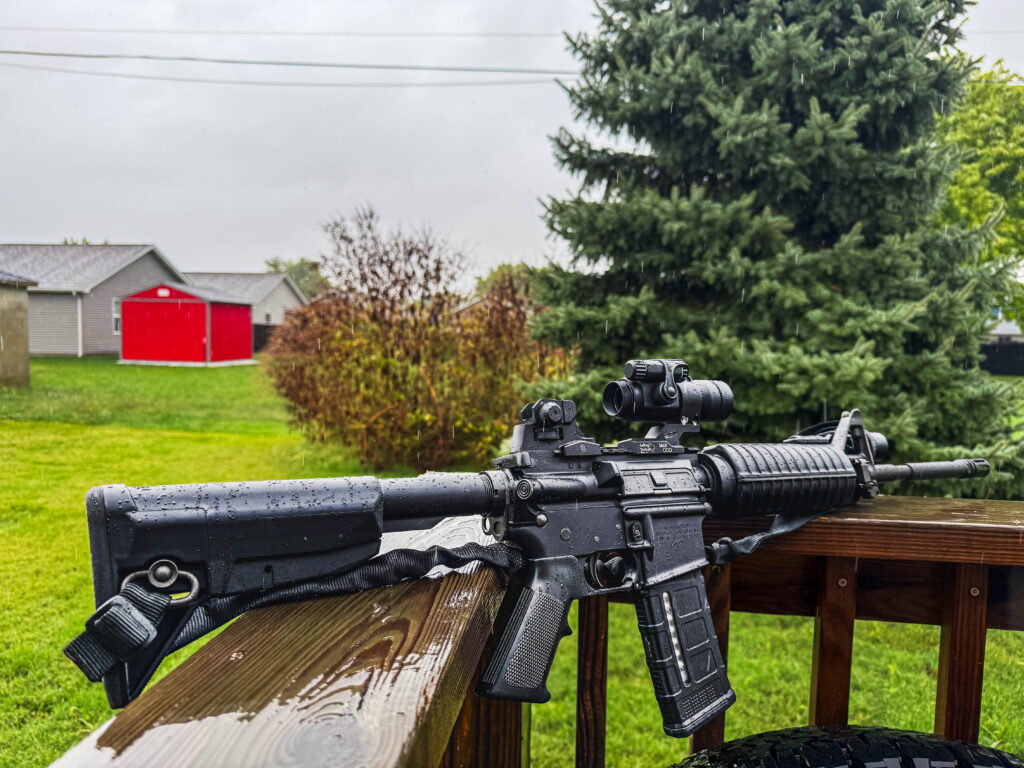
While nobody can tell you what is right for you except you, this always begs the question, “Well then, what do you use?”. And I am more than happy to tell you. But let me explain to you how I use mine first. Primarily, my rifle is used for home defense, training, and those “just in case” things we all like discussing. For home defense, it should be noted that I do live in a house, with some fairly close neighbors, so over penetration is a concern to a point.
My base rifle is a Colt Carbine, 16-inch “M4” profile barrel, A2 flash hider, 4-position adjustable stock, and the stock itself is a BCM Gunfighter stock. I also use the 90-degree sling mount that was used on the older M4 carbines. I use the traditional round “A2” style handguards. Mine are the older double heat shield handguards, but I removed the second heat shield from the top so that I could mount my light.
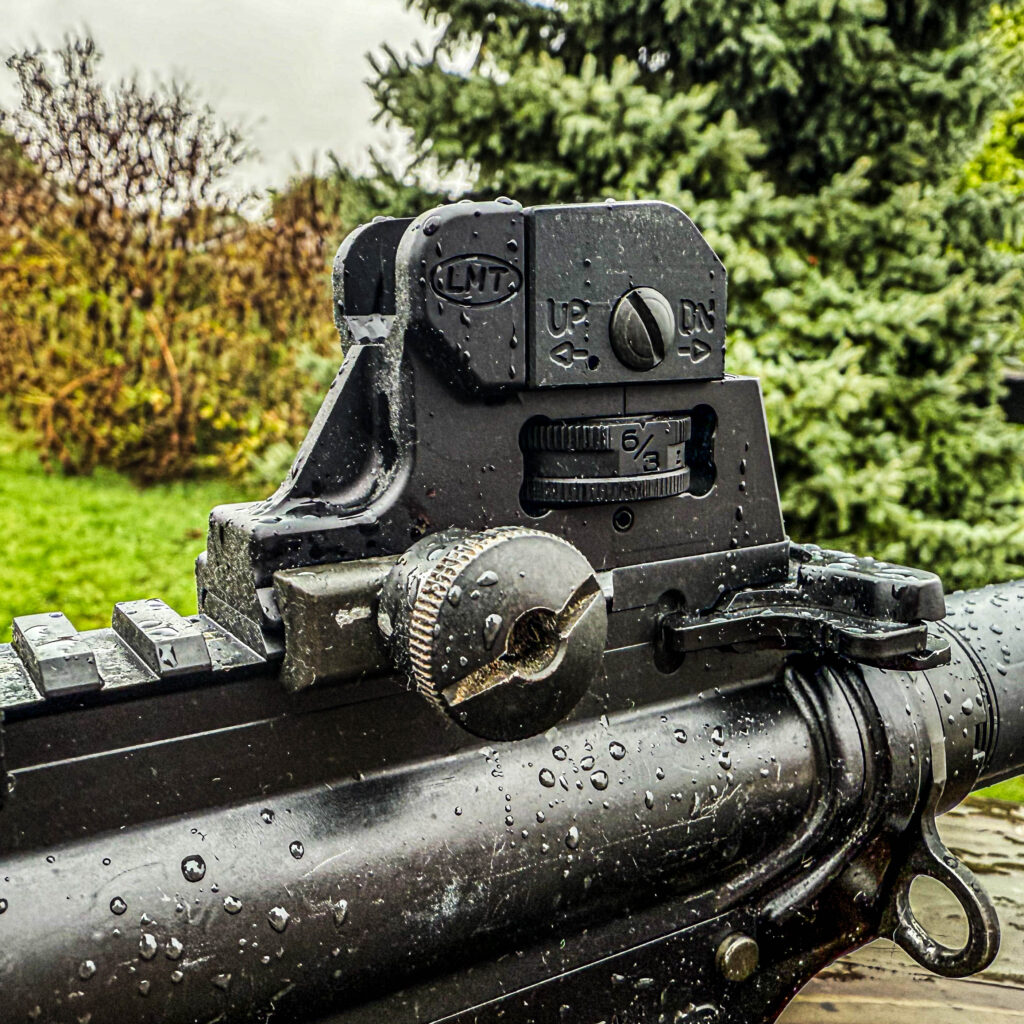
For iron sights, I use the factory A2 front post paired up with an LMT “Chopped Carry Handle: rear sight. This gives all the strength of a carry handle type sight, but with the ability to use the rest of the rail. I leave mine with the larger aperture in my line of sight. The small is great for distance, but for my applications, especially when factoring in low light environments, the large aperture is perfect.
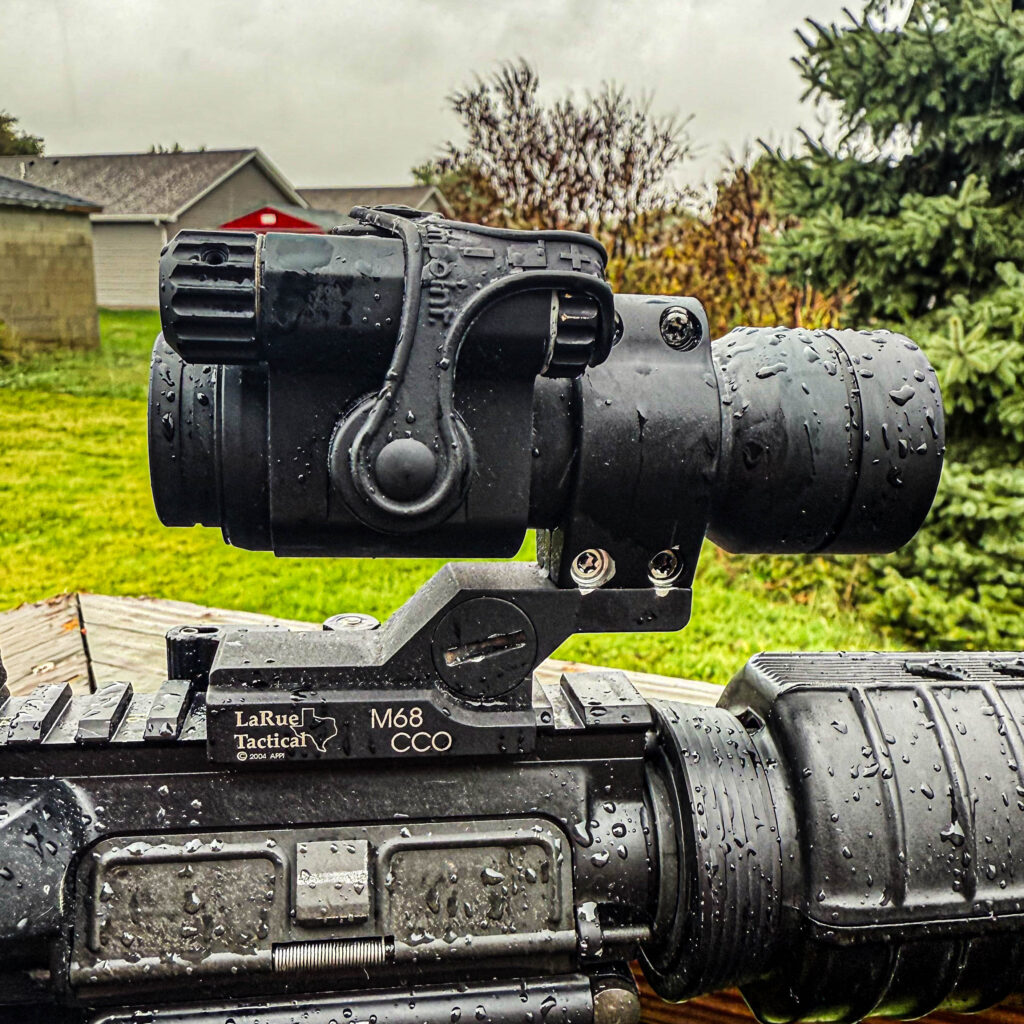
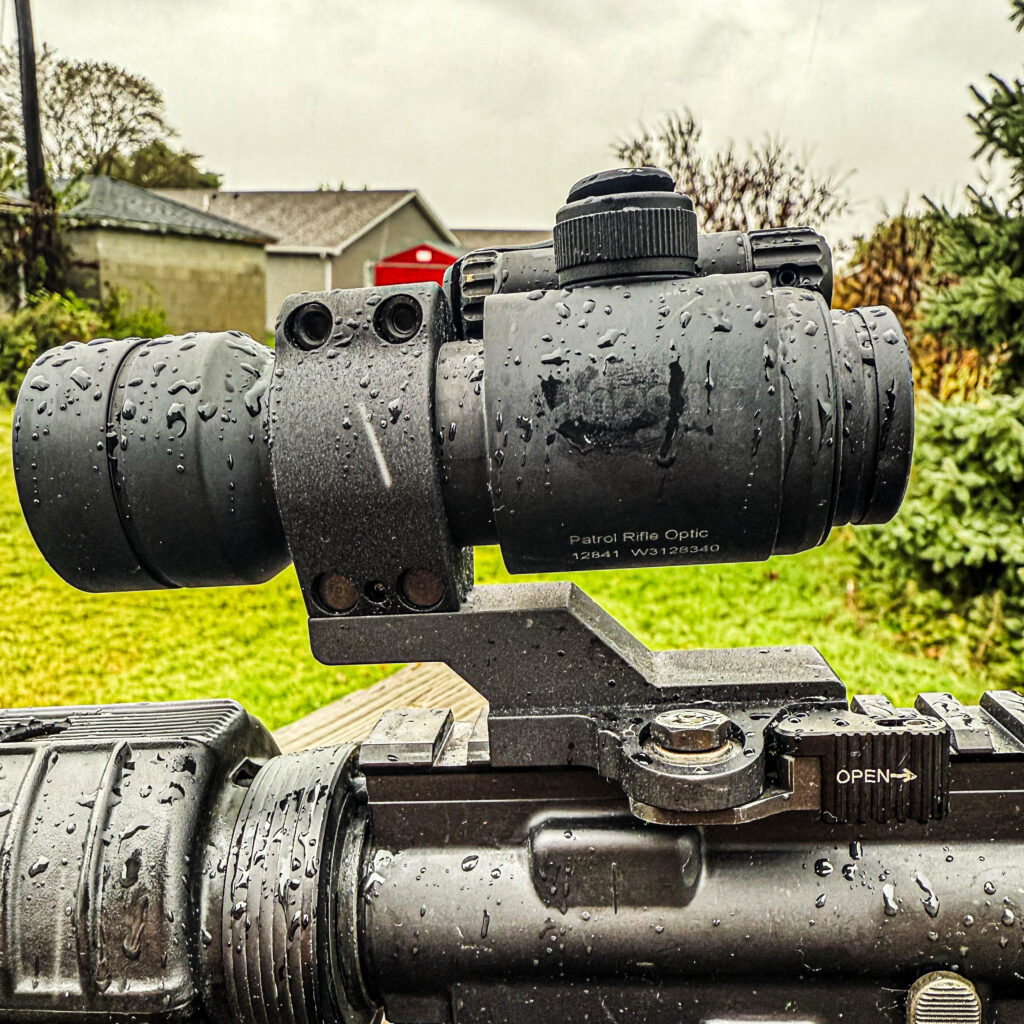
While on the topic of sights, let’s touch on my optic. I use an Aimpoint PRO. This affords me the quality and proveness that I look for, a crisp dot (even with my slight astigmatism), excellent battery life. The battery life allows me to leave the dot turned on all the time, and I just change the batteries once a year, at New Year’s. But again, even if I forget, I can just use my irons. And yes, I do practice what I preach. I use the Larue Tactical Cantilever LT 129 QD mount. This mount is light enough with superb durability. And I get the functionality that we previously discussed.
For a light of course I use the Surefire G2X Tactical that I previously recommended. The “tactical” designation means that the light only has one mode of operation. So there is no multiple-click, multiple brightness feature, which, in my mind, for a weapon light, is optimal. I have it mounted to the handguards using an Impact Weapons Components A2 handguard light mount. After I removed the second heat shield on the top, I was able to just screw in the mount to the existing ventilation hole in the top of the handguard.
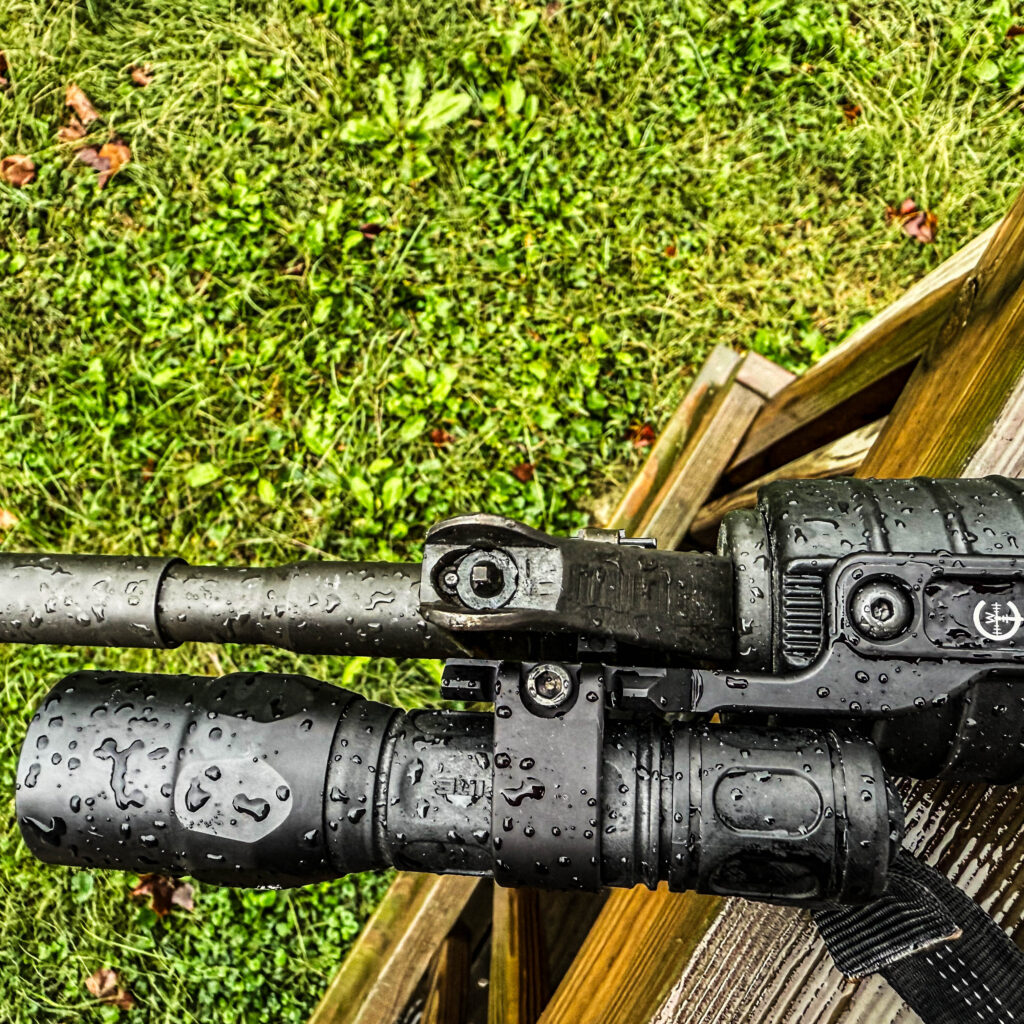
My sling setup is very simple. It is a Tier One Citizen Bungee 2-point sling. I have it “hard-mounted” (fed directly through the front attachment point), and then it is attached via a QD socket in the BCM stock. There is no quick-adjust feature with this sling. It is a “set and forget” type of design. If extra length is needed, just push against the bungee. There isn’t much to say about this. It is a simple setup that just works.
Without the optic, I was able to acquire this setup well within the $1400 max. I believe the original rifle was only around $800, which, for the quality it may be one of the best “values” I have ever gotten. The optic and mount I purchased used for around $450. I think that price is perfectly reasonable for the product received. Everything else I bought new, and it has been a couple of years since I purchased it, so I do not want to quote prices because I don’t remember all of them, and they may have changed a bit since the date of purchase.
Magazines
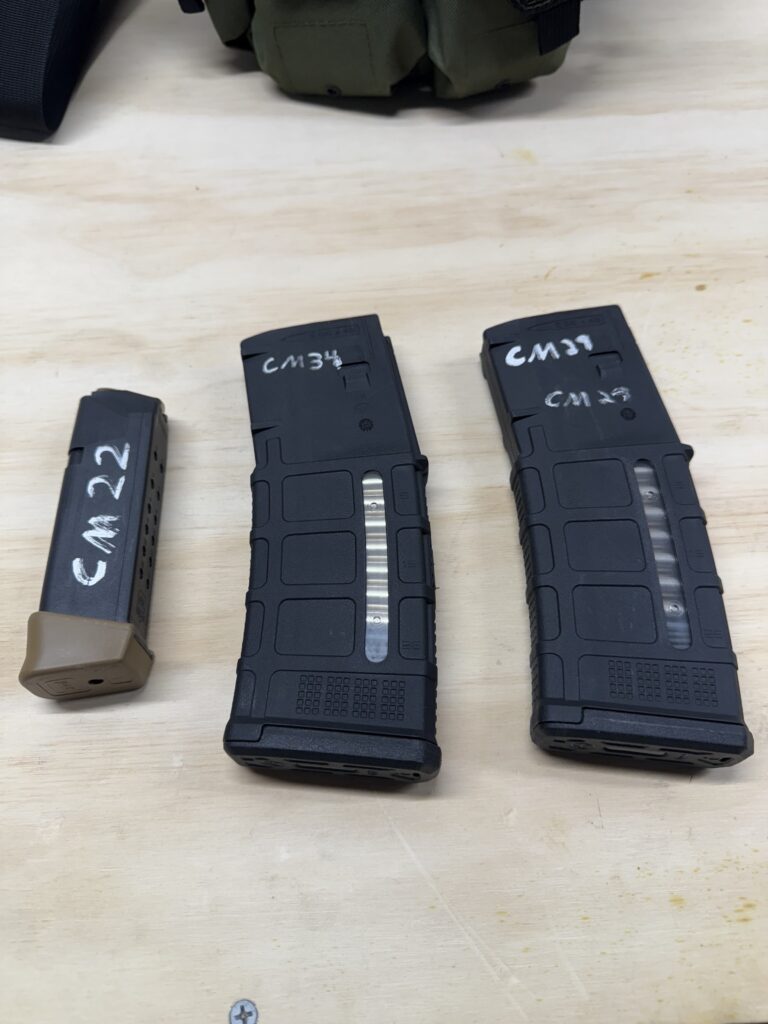
A conversation about the AR cannot be had without a discussion on feeding the gun. And just like everything else with this platform, the market is overflowing with options. Again, what I will tell you here is not a comprehensive list of good magazines, these are just what I use. And this will be a short list. For “stacking them deep” I use the standard aluminum magazines. I get them used or new. The only caveat here is all of mine have Magpul anti tilt followers. My go to magazines are either the M2 or now the M3 Magpul magazines. I pick them up in bulk when I can find them on sale. Normally on sale I can find M3 30 round, windowed magazines for around $14 a piece. These are the magazines I use. Not to say there are no other good magazines, but I do not have experince with them and I don’t want to endorse them without having a good background of knowledge.
Support Gear
So now you have a solid, squared away rifle. What now? Well, I do believe that a discussion on support gear is in play. Many people use a myriad of different items. I have seen everything from Vietnam-era surplus gear, all the way up to modern plate carriers and chest rigs. Setups range from $20 to thousands of dollars. My philosophy for the armed and prepared citizen will surprise none of you. Simplicity is king. For standard civilian engagements, needing to shoot your 30 rounds, reloading, shooting another 30 rounds, and continuing to do that is nearly unheard of. If you know of an instance where this has happened and been legally justified, I would love to hear about it and see some links in the comments section.
While I don’t have anything against any of these solutions, and I have had some chest rigs, and I do have a plate carrier, these are not the solution I prefer. I use a simple shoulder bag. It is from US Peacekeeper. It was designed for law enforcement officers who have to wear concealed vest and cant put everything on their vests.
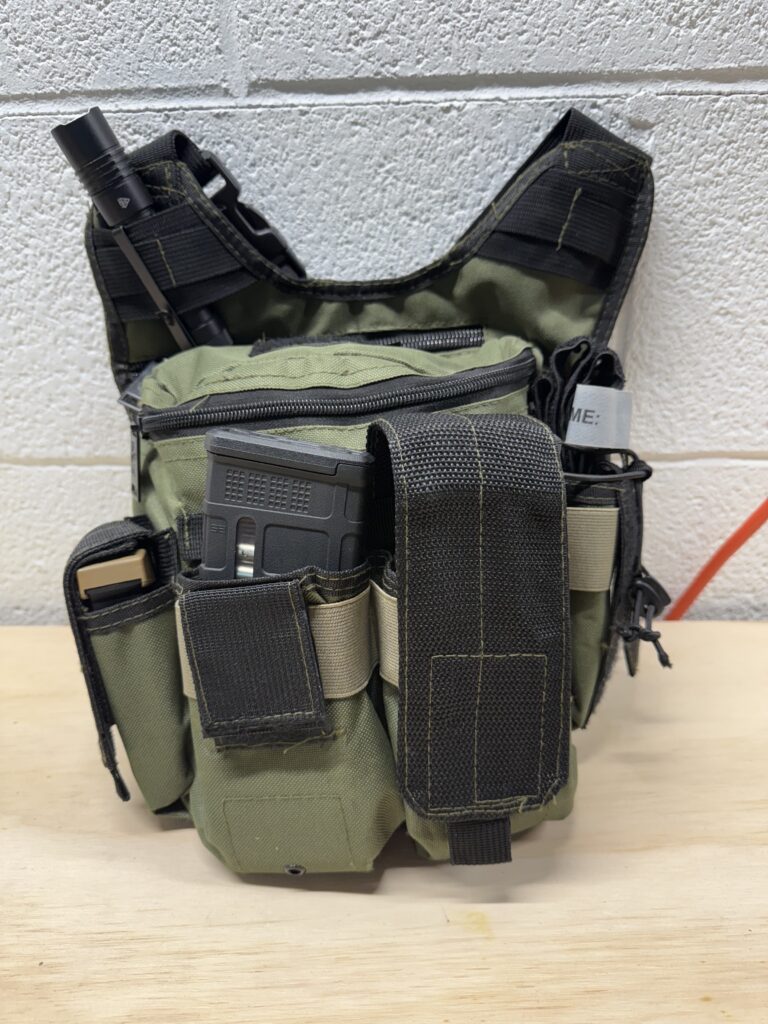
Let’s go over what I keep in this bag. I have two, 30-round M3 PMAGs in the rifle pouches; in the pistol mag pouch, I keep a 19-round Glock magazine. I have a spare handheld flashlight and a medical kit from North American Rescue. In my rifle magazines, I have 55-grain Speer Gold Dot Soft points, and in my pistol magazines, I have 124-grain 9mm +P Speer Gold Dot Hollow Points. This is designed to be used in conjunction with my Gen 2 Glock 19, hence the spare handheld light, because that Glock 19 was made before light rails were a common thing to have on a handgun.
Medical Kit
Medical kits and medical-related topics are something you will continually featured here on the project. While I am very open about the fact that I have never been in a gunfight, and all the opinions I have come from the wisdom and training of those who have, medical treatment, and training is something I do have some experience with. I make a habit of not mixing my career in with the project, but for this discussion, it is relevant. I have worked in Fire and Emergency Medical Services for over 5 years at the time of writing this. I have seen and treated numerous gunshots and penetrating traumas in that time. Much of the gear I use mimics what I have used in my career. Now that I have successfully patted myself on the back for being a “hero”, and you understand that I am qualified to talk about this, let’s get back to it.
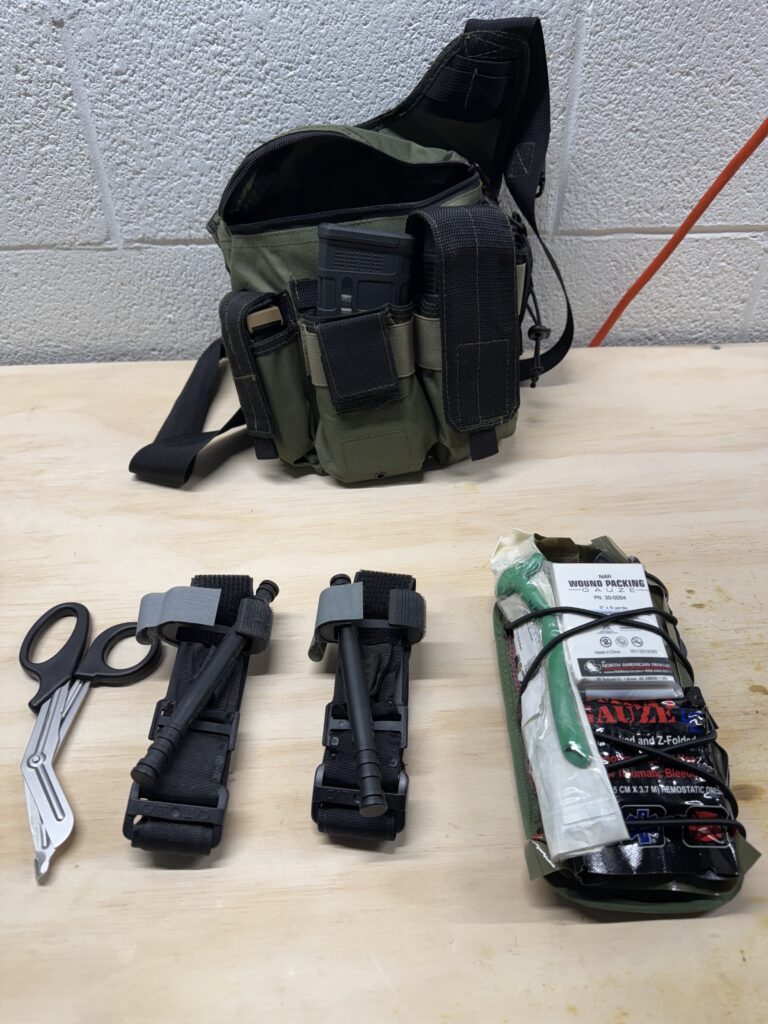
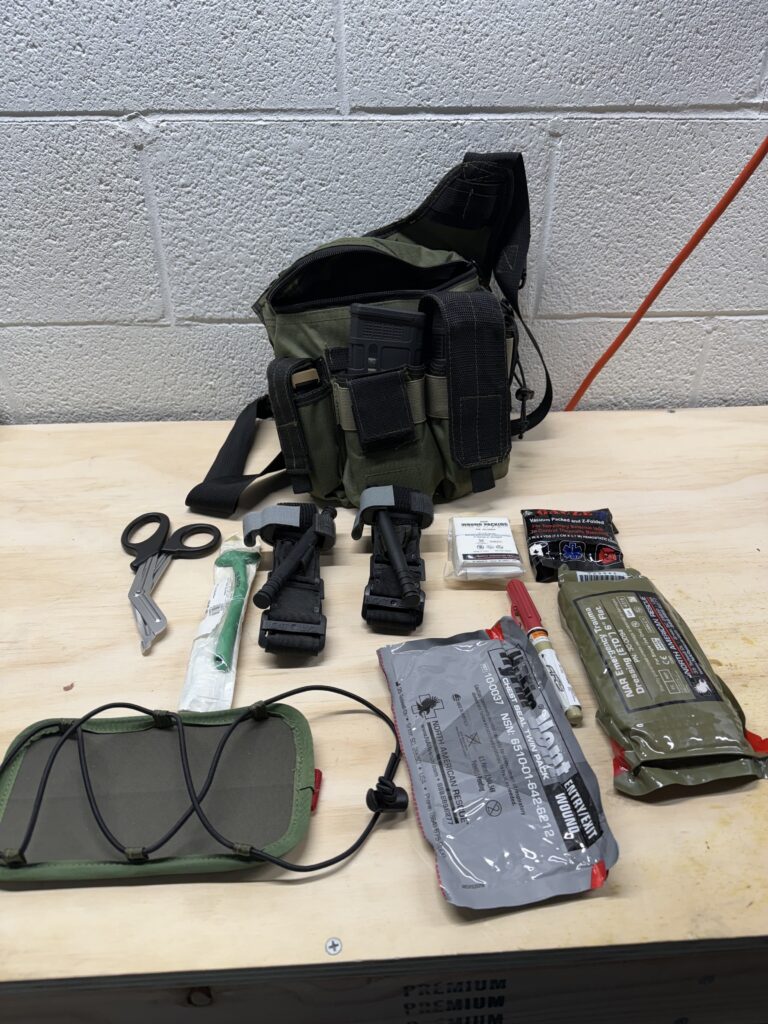
My kits are quite simple; again, there is no surprise here. Sometimes I buy a premade kit, but I often like to build my own. For this kit, I use a premade bag or “card” to carry my gear. The kit I keep in my rifle bag is a premade kit from North American Rescue, the RIG Series Eagle IFAK (Advanced). It offers me what I would consider to be the essentials, without adding much bulk, and it all fits inside the main compartment of my bag nicely. The only thing I added was an extra CAT tourniquet. Here is an inventory of my kit.
- (2) CAT tourniquets
- (2) HyFen Ventilated Chest Seals
- Quick Clot Combat Gauze
- Trauma Bandage
- Wound Packing Gauze
- NasoPharyngeal Airway, size 28F (commonly accepted as the universal size for most adults)
- 14 GA Chest Decompression Needle
- Trauma Shears
These are just the items that I feel are necessary. The only “nice to haves” in this kit are the Quick Clot Gauze and the chest decompression needle. The quick clot is a nice upgrade, but if you find it to be cost-prohibitive, then by all means just get normal wound packing gauze. Technique matters far more than which type of gauze you use. Now, a note on the needle. DO NOT CARRY THIS IF YOU ARE NOT PROPERLY TRAINED. YOU WILL HURT SOMEBODY. You only see this in my kit because I have been properly trained on how to use this and when it is appropriate to use it. But please, do everyone a favor, do not carry this if you are not properly trained. There are mere inches between the correct use and causing a massive problem that CANNOT be corrected without a trauma team. No medical gear should be used without proper training, but this one especially should not be used. You are likely to do more harm than good here without proper training. And in case you missed the memo…
DO NOT USE GEAR IF YOU ARE NOT PROPERLY TRAINED ON HOW AND WHEN TO USE IT
None of us came out of the womb knowing how to do any of this. We all learned at one point or another. There is nothing natural about shooting or medical care. Some people pick up quicker than others, but nobody knew how without someone teaching them. And as much as I love writing here, nothing I say here should be considered proper training. I am not an instructor or a teacher. And this is not the appropriate format to be trained in. Please seek professional training and learn how to use your gear.
As always, friends, I want to hear from you. What was your first AR, or your favorite AR? If you do not have one yet, which one are you considering? What support gear do you have? And what kind of training have you received? Head on down to the comments and let’s have a conversation.
Until next time friends
Chuck