
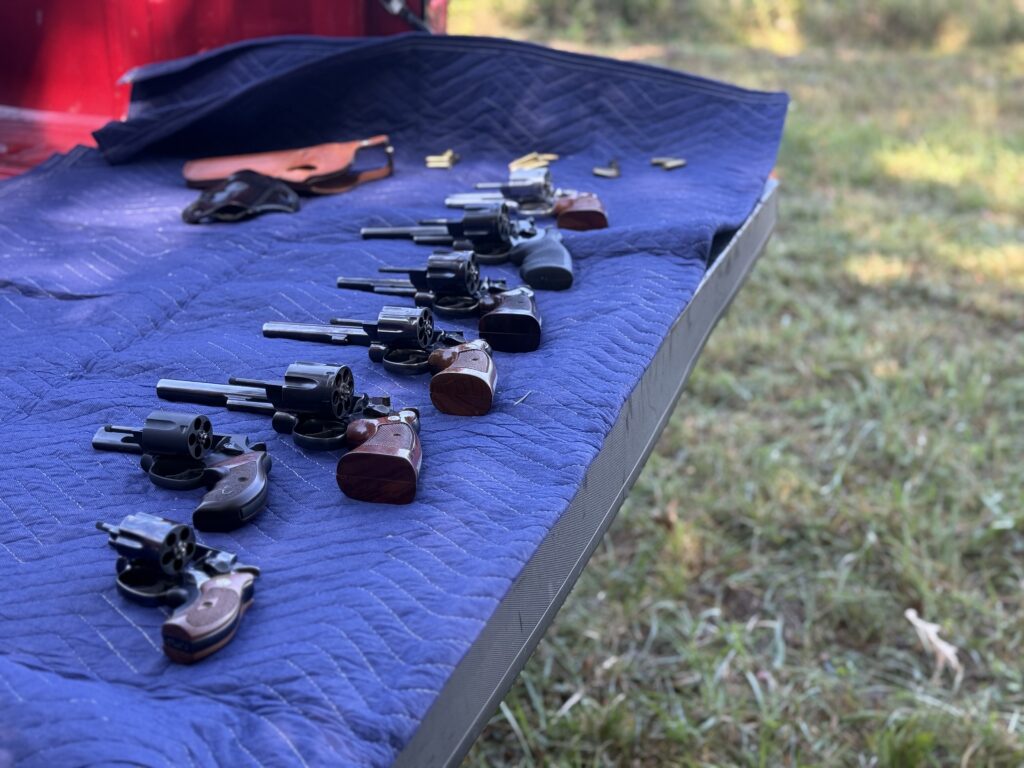
When deciding how to get everything kicked off for this project, I thought it would be fitting to have some posts that detail some of the main gear and equipment that you will see here. With that being said, let’s start with some of my personal favorites, the revolvers. Now, before you roll your eyes or begin to heckle, I should explain myself. Revolvers are fantastic tools that are well-suited for many jobs; however, I would be a fool to make the case that they are the perfect tool for every job. Regardless of the task at hand, no one tool is perfect for every task, and shooting is no different.
Why, in 2025, with all the fantastic new designs that are out there, would I choose a revolver as my favorite? There are numerous reasons that I hold this belief. And the first of them is the simplicity of a revolver. While I am well-versed in the scriptures of our “Lord and Savior”, Gaston Glock, there are few guns out there that are as simple to operate as a revolver. Notice the phrase that I used, “simple to operate”. Yes, I am aware that Glocks have very few parts, and even fewer moving parts (33 parts total if memory serves me right). Yes, almost every part in a Glock can be easily replaced with nothing more than an appropriately sized punch. But service work is not what I am talking about here. I am talking about the use of the gun in the field. And for this task, a revolver is a superb tool. Revolvers only have a handful of parts to operate the gun: the trigger, ejector rod, cylinder release, and, on certain occasions, the hammer (more on that caveat later). Under duress, the simpler, the better. This is a fact I know for myself, as well as something you can find from many credible names in our field.
The second reason behind my love of the revolver is how they handle. Now this is a highly subjective opinion. Many people may find revolvers to be cumbersome or awkward to use. Especially those who learned to shoot on automatic-loading designs. But let’s take a trip down memory lane for a moment. When I was a young boy, I first learned to shoot with a Red Ryder BB gun. After that was my first “real gun,” a bolt-action Savage 22LR. And when the time came for me to learn how to shoot a handgun, I started with a Smith and Wesson Model 14 Target Masterpiece. For those unfamiliar with this design, it is a K Frame Smith and Wesson, with a 6-inch barrel, target sights, target grips, and chambered in 38 Special. I fell in love with this gun and still shoot it to this day, and rest assured, you will see it featured plenty here. It belongs to my father, but lives with me, and I can confidently say that out of all the people who have shot it over the years, I have shot it the most. I have not the slightest clue as far as how many rounds I have through it or how many rounds it has in total, but I know it is in the thousands. I learned the fundamentals of accurate pistol shooting on that gun, and I still frequently use it to practice or just enjoy a little bit of nostalgia. Of course, when it became the time for me to buy my first revolver, it should be no shock that I picked a K Frame Smith and Wesson. It was a Model 10-8 chambered in 38 Special. The gun was a surplus police trade-in that was in exceptionally rough shape. I didn’t have it for too long before I wanted to get something that was nicer and in better shape. And before anyone gets confused, the Model 10 is a fantastic revolver, just my particular Model 10 was rough. So after that came my S&W Model 686 No Dash. Also known as the Distinguished Combat Magnum. You will notice that I often use the “names” of these Smiths, and that is strictly because I like it. I feel that it gives the gun some personality, and not just a number. I frequently enjoy that revolver, and it is what stands guard at my bedside, loaded up with some Black Hills Ammunition, 357 Magnum, 125 grain JHP.
So we know that I like the simplicity of operation, and their handling characteristics, and of course some nostalgia, but surely I have more reasons than that. And if that is what you thought, you would be correct. You will hear many people talk about two significant pitfalls of the double action revolver being it is slow to load, and the “heavy trigger”. And both of those are valid points of concern, so let’s address that for a moment. Yes, for the average shooter, a double-action revolver is far slower to load than a traditional detachable magazine auto loader. But remember, I have been shooting revolvers for over 15 years. And over all those years, I have also been practicing with speed loaders. Most typically HKS style, but I have also used Safariland, and several other types we will go over another time. While I am no Jerry Miculek, I am rather quick with a speed loader, at least quick enough that I consider it acceptable for the tasks that I see myself encountering. The second pitfall people will be ever so swift to point out is the “heavy” trigger. And again, yes, compared to a Glock or most other “striker-fired” systems, a revolver trigger is heavier. But I have found that trigger weight is not at all the only, nor is it the most significant factor when working the trigger. I would much rather take a 9-pound double-action trigger that is smooth and clean, over a 6-pound mushy trigger with lots of stack and staging in it. Over the years that I have been shooting, I have never found a revolver trigger that was unusable, provided that the trigger was within serviceable specifications. And out of the training and use I have on those trigger styles, I found that I can shoot almost any trigger style with an acceptable level of accuracy. Some I shoot better than others, but almost all of them I can hit what I am shooting at. To this day, the best group I have ever fired from a handgun was from that same Model 14 we spoke of earlier. While I have tried to best it with my Glocks, I have yet to do that.
With all of that being said, here are some of the wheel guns you will see featured regularly
Smith and Wesson Model 686 No Dash, Distinguished Combat Magnum
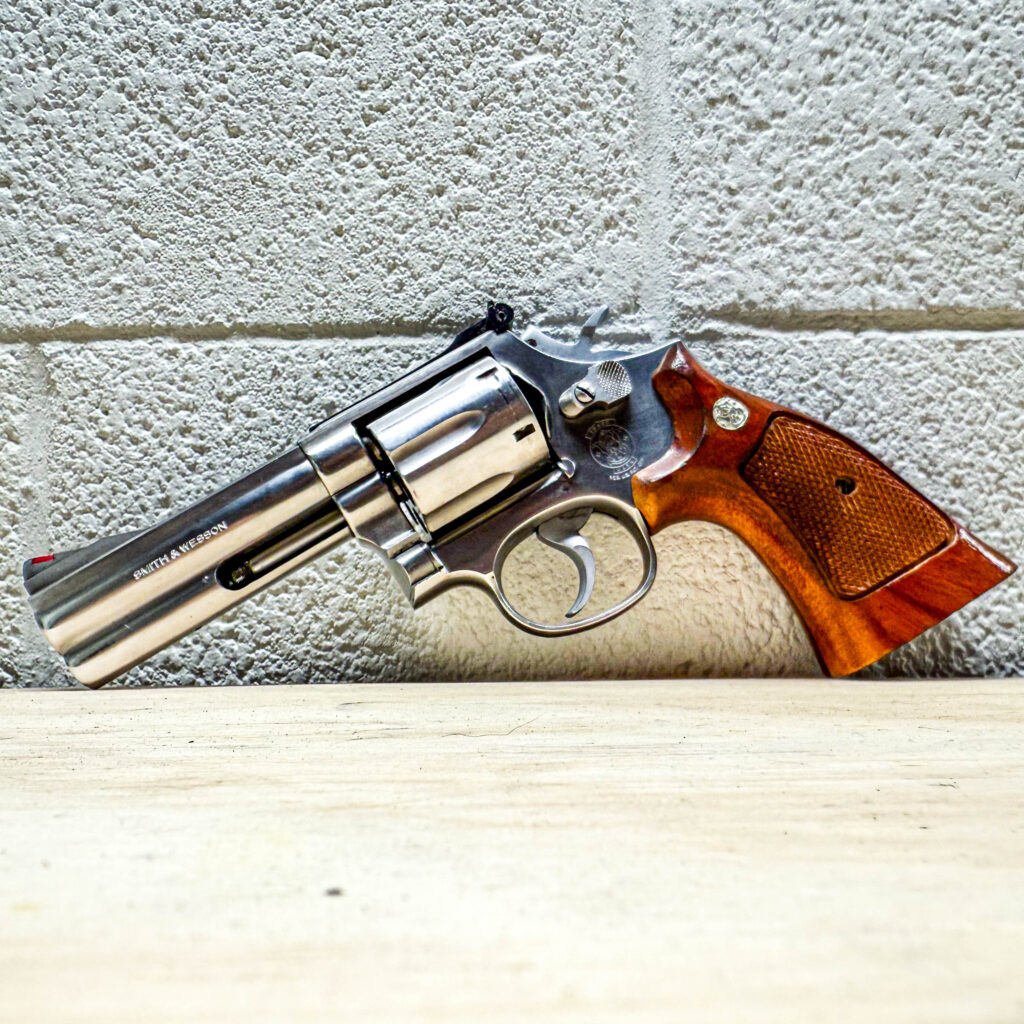
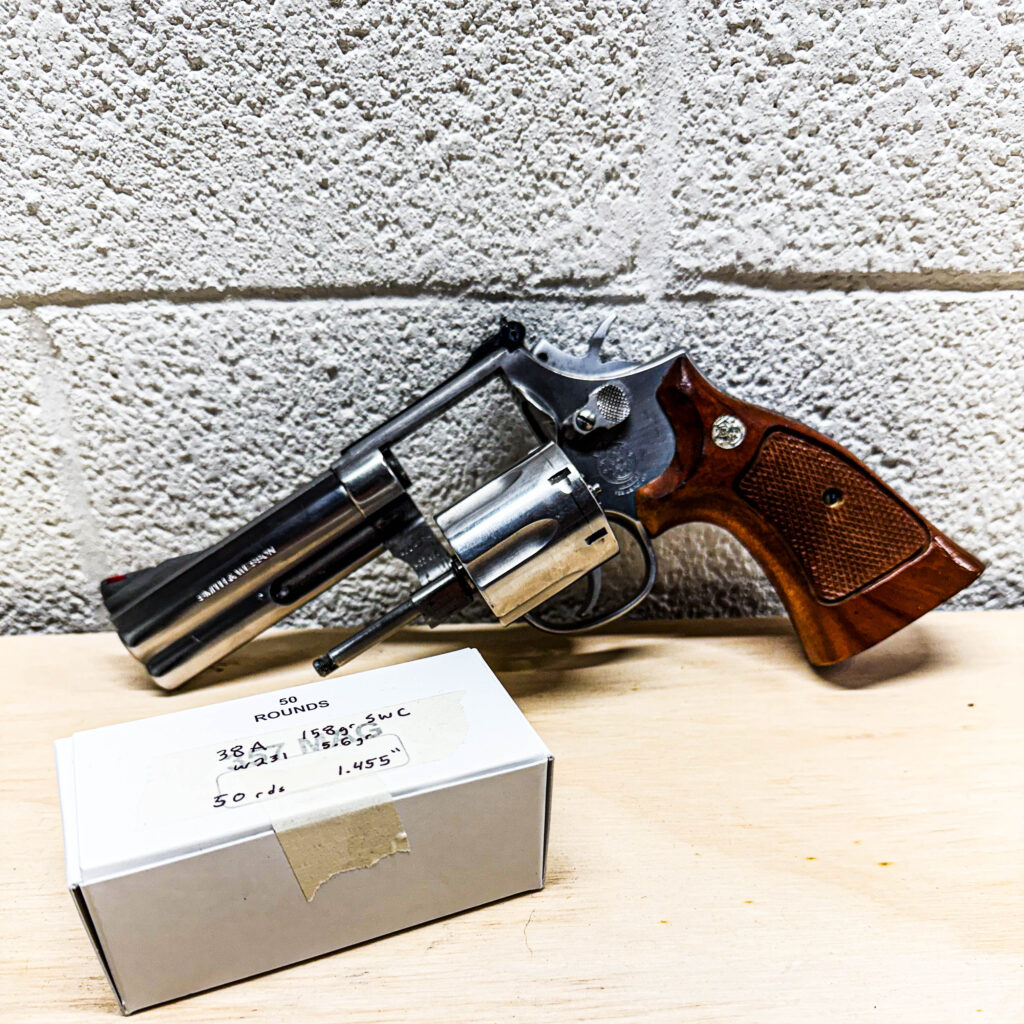
This was my second classic Smith revolver. It features a 4-inch barrel, adjustable sights, and factory speedloader cut stocks. This revolver has proven to be accurate, reliable, and an excellent addition to my collection. The only thing I have done to this revolver was recast the front sight insert. When I got it, the old insert was so dirty and unsavable. So I ordered a casting resin kit and poured a new one. It has held up well so far, but only time will tell if I cast inserts as well as the factory does.
Smith and Wesson Model 27-2, Registered Magnum
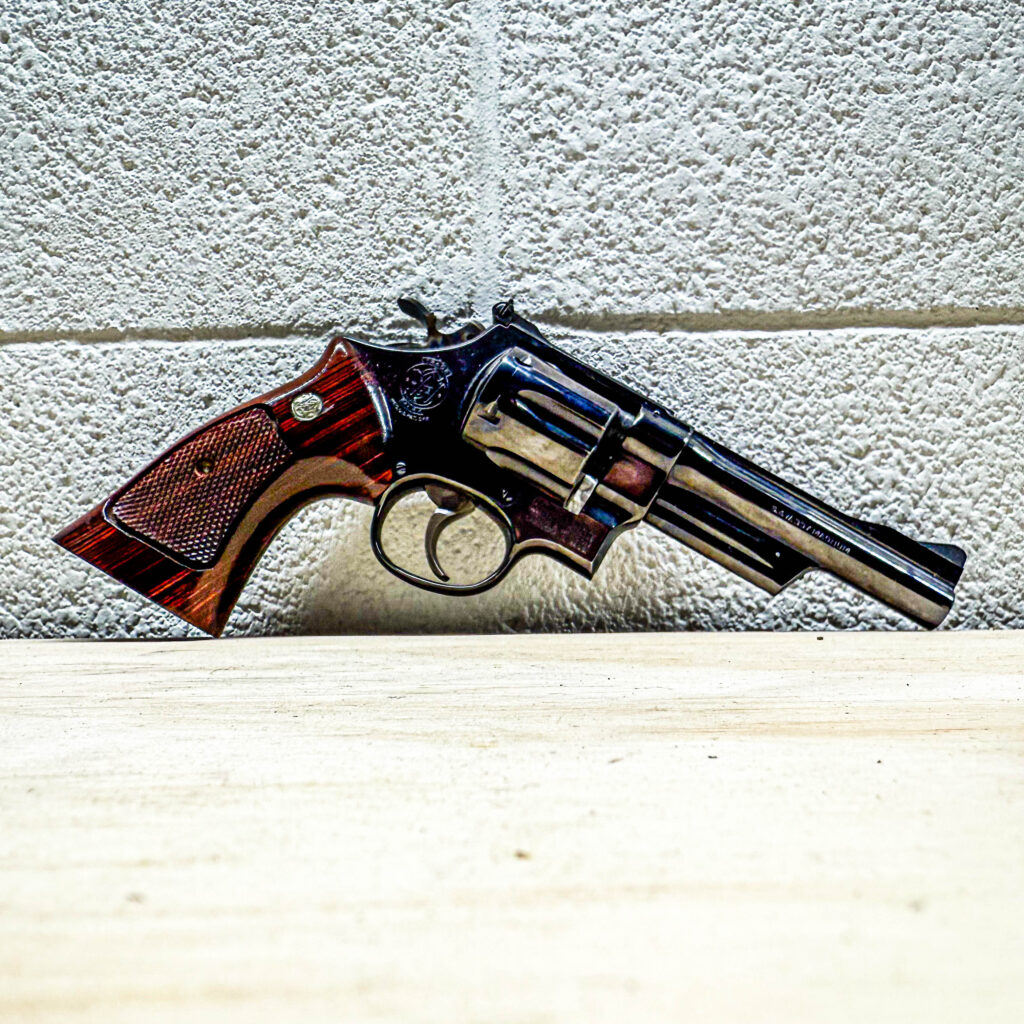
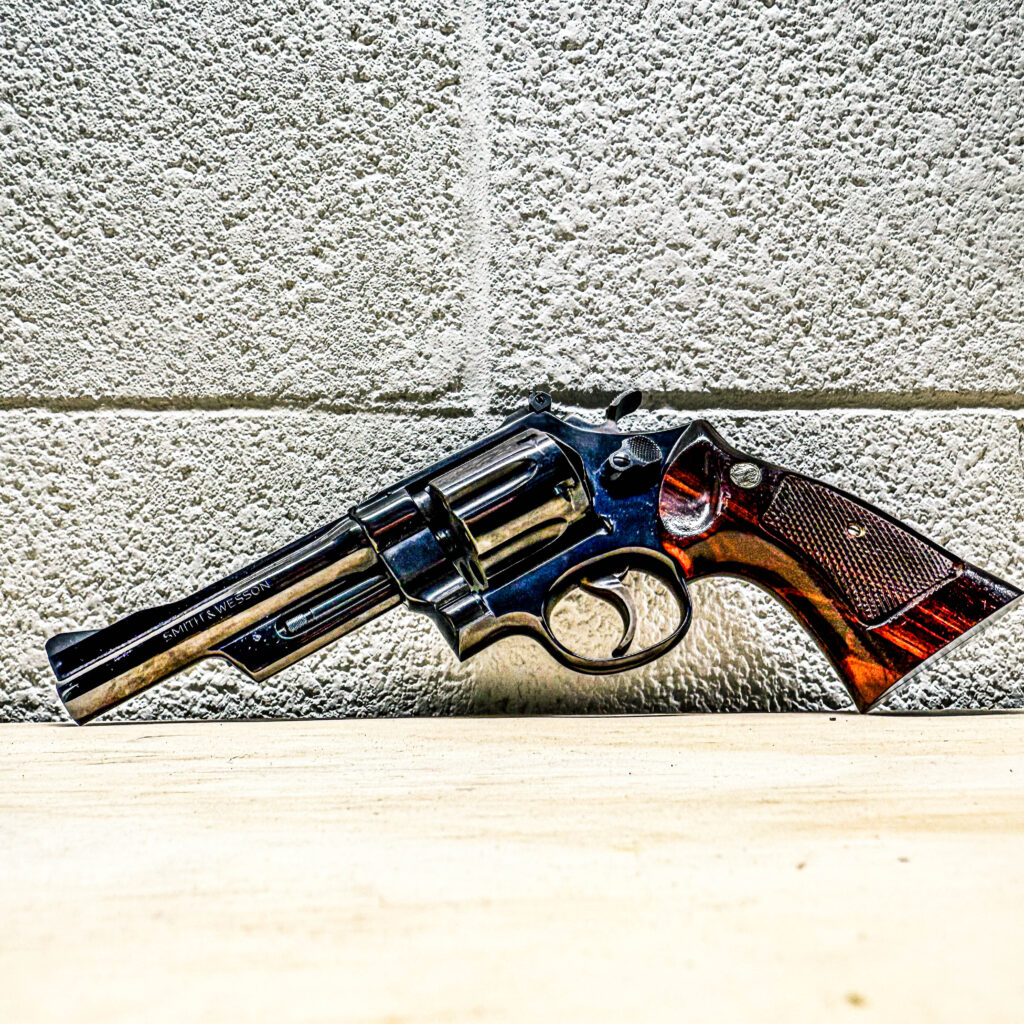
For quite some time, this was my “grail gun”. The gun that I always wanted but could not find, or could not afford when I did find one. I acquired this one early in 2025 through an auction. To this day it is one of the most pristine Model 27s I have ever seen. The bluing is immaculate, the Goncolo Alves stocks are without blemish and have captivating figure and coloration. The gun has not been altered since it left the factory, and I do not see a need to change it. There are no nicks in the top strap checkering, and it has the 3T treatment from the factory. While I do shoot this gun, it does not see near the round count that my 686 sees. The only thing I could ever see myself changing is cutting the front sight to cast a resin sight like what I did on my 686. But I am torn about changing the gun from its factory condition. One of the things that I find unique about this gun is the 5-inch barrel. I like to use this in velocity testing, due to there not being many 5-inch barrels out there now. Plenty of 6-inch and 4-inch barrels, but not many 5-inch barrels to be found. If anyone asks me what my most beautiful gun is, I unreservedly answer with this gun. And I have not found too many who can disagree.
Smith and Wesson Model 36 No Dash, Chiefs Special
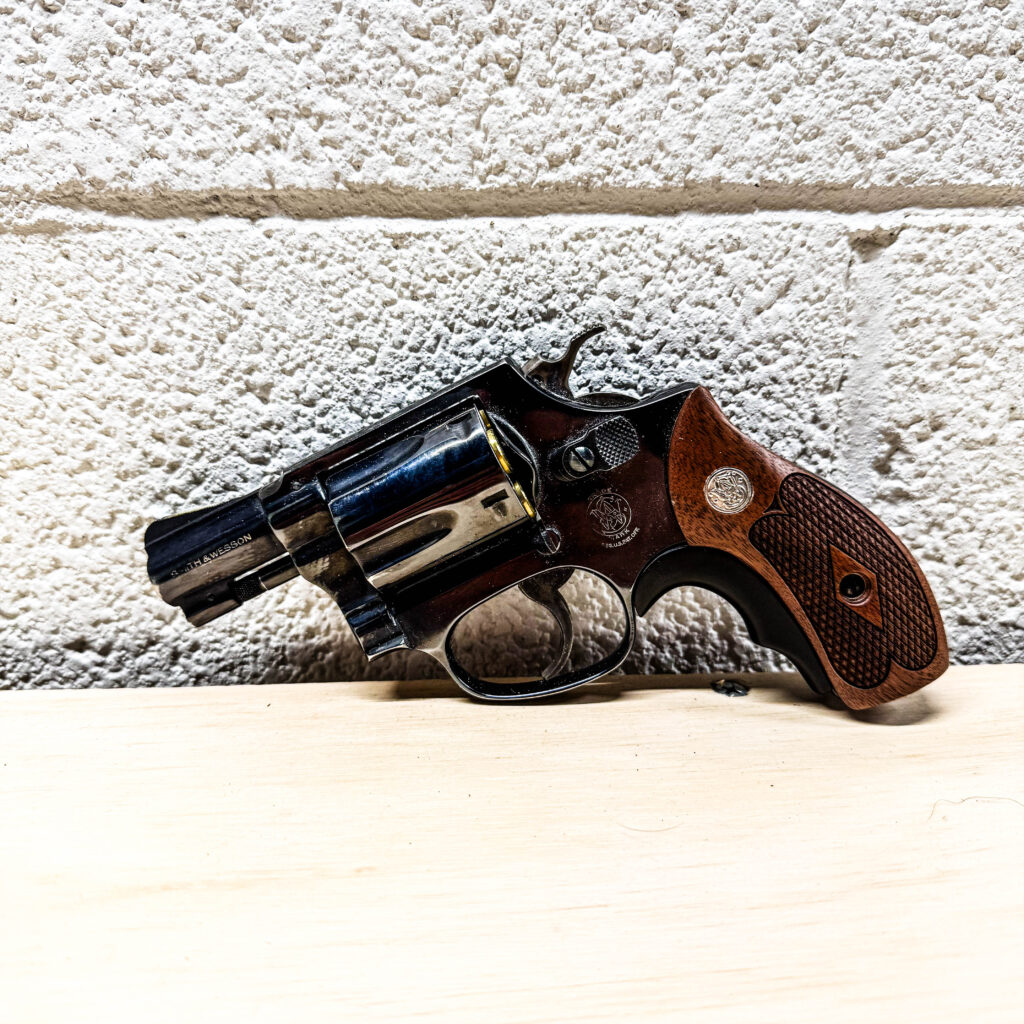
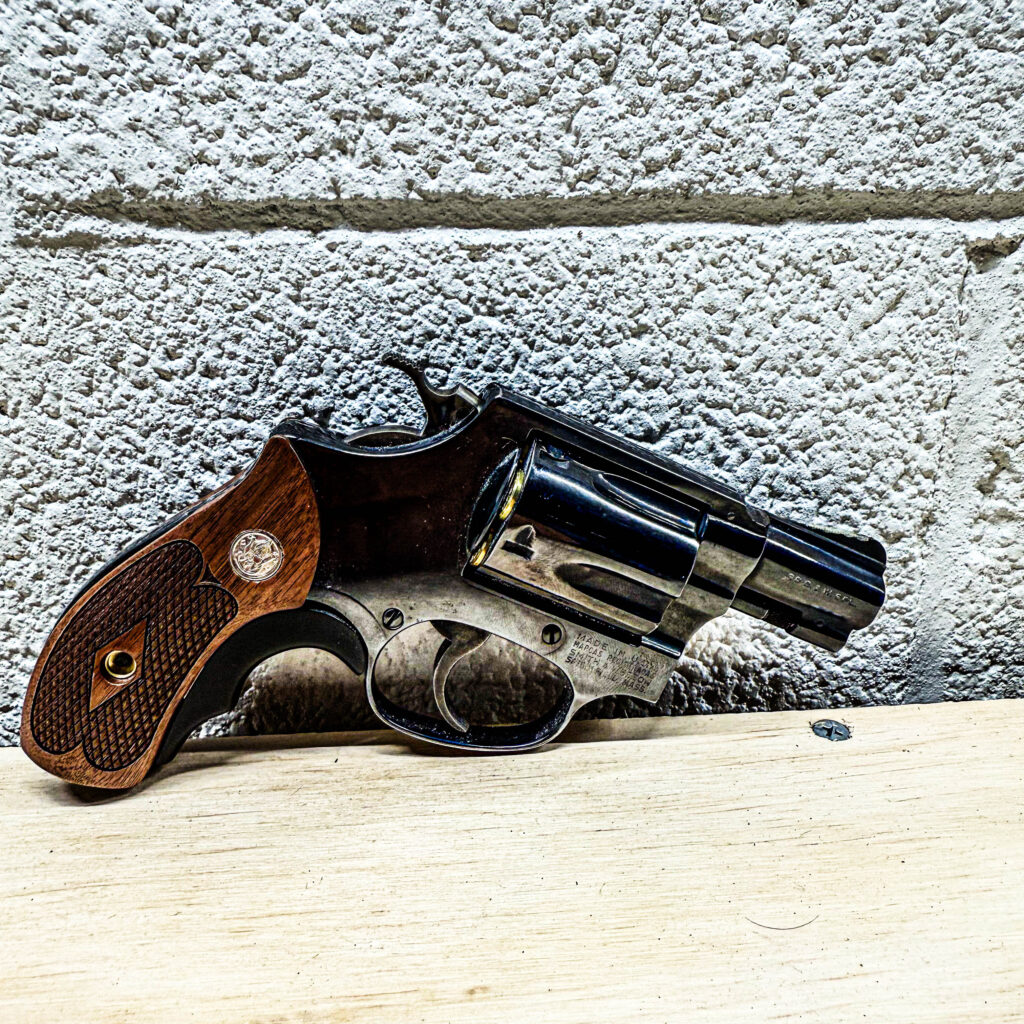
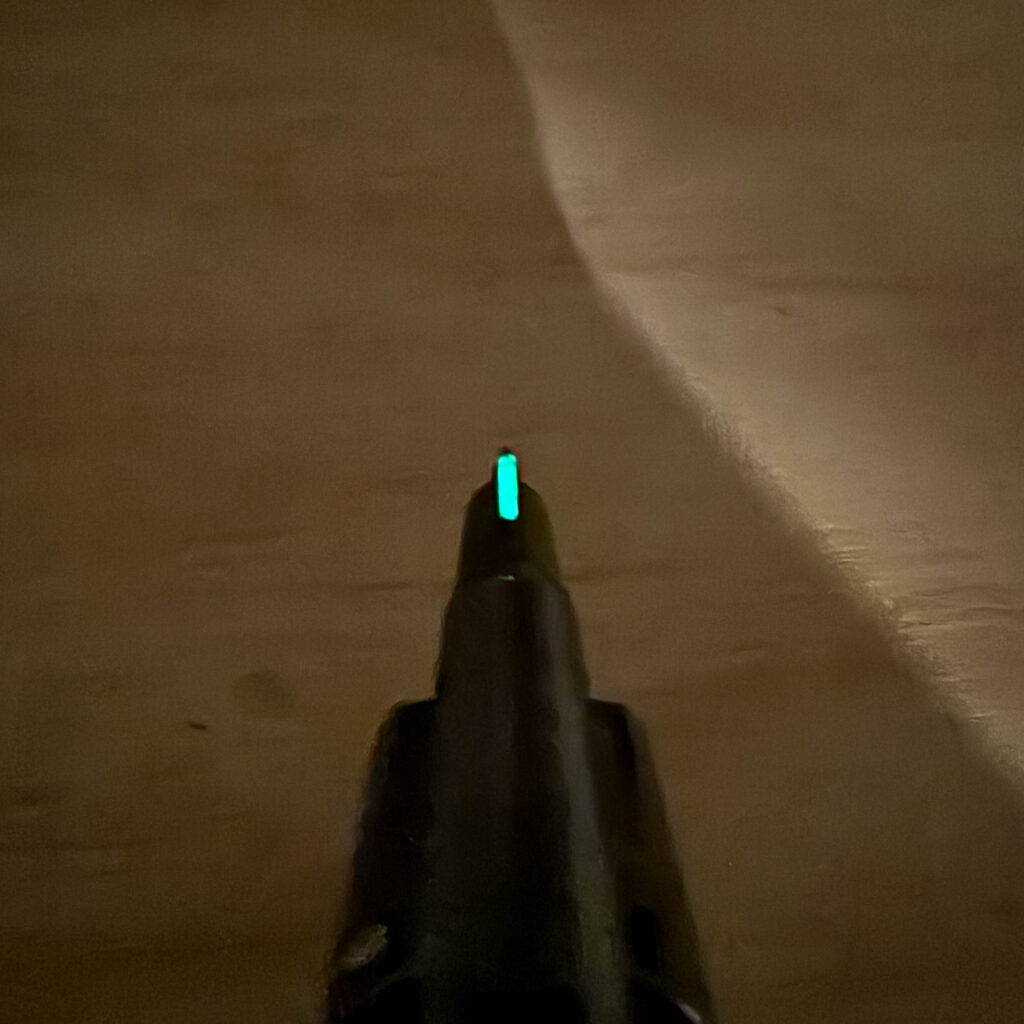
This is a revolver that has been in my collection for a few years now. I like the Smith J frames for a concealed carry gun. They are compact, lightweight, reliable, durable, and simple. All the things we look for in a carry gun. Many will be quick to point out that these guns often have a capacity of 5 rounds, typically of 38 Special. And yes, that is accurate. When looking at civilian self-defense shootings, to see a shooting that goes over 5 rounds is rare, and to see a shooting that DOES go over 5 rounds but those extra rounds were justified is all but unheard of. That is not me saying that it is impossible; what I am saying is that it is monumentally unlikely. This is a good time to mention how I carry these J frames. Normally, they are used as an ankle gun. My normal concealed carry handgun is a Gen 2 Glock 19. I carry it in a Kramer #2 IWB holster. Back before ammo became impossible to find and cost more than some car payments for a case, I shot between 2000-5000 rounds a year through that Glock. I made regular trips to the range either weekly or bi-weekly with set training regimens. I knew how much I would fire for each day. And that is how I kept an approximate round count. So no, I don’t have a record showing exactly that I shot 2,603 rounds from January 1-January 1. But I did have an approximate number. But I digress. The J frame is normally a backup gun. For those who say, “if your normal carry gun holds 15 rounds, and you find it incredibly unlikely that you will fire more than 5, why bother with a backup gun?”. The first answer is a simple one; it is unlikely that my Glock will fail, but if it does, I have another option. However, the real reason I carry an ankle gun is for the versatility of access. I am a firm believer that 4 o’clock hip carry is optimal for most conceal carry applications, but there are times when it isn’t. The most notable and often encountered of those is while seated in a vehicle. With a normal vehicle and a center console, with a seat belt on, it can be difficult to access a hip carried gun. For me and what I drive, it is far more efficient for me to access an ankle gun. It all comes down to options. Many think carrying two guns is completely unnecessary and foolish. And if that is how you feel, then I urge you not to do it. But I like options, and these are the options that work best for me. This gun is rather plain. A two-inch barrel, 5 rounds of 38 Spl., blued finish, wood “panel” style grips, and a grip adapter. Despite the size of this gun, I can shoot it with more than acceptable accuracy for its intended use. It is certainly another piece of gear that just works.
Smith and Wesson Model 637, Performance Center
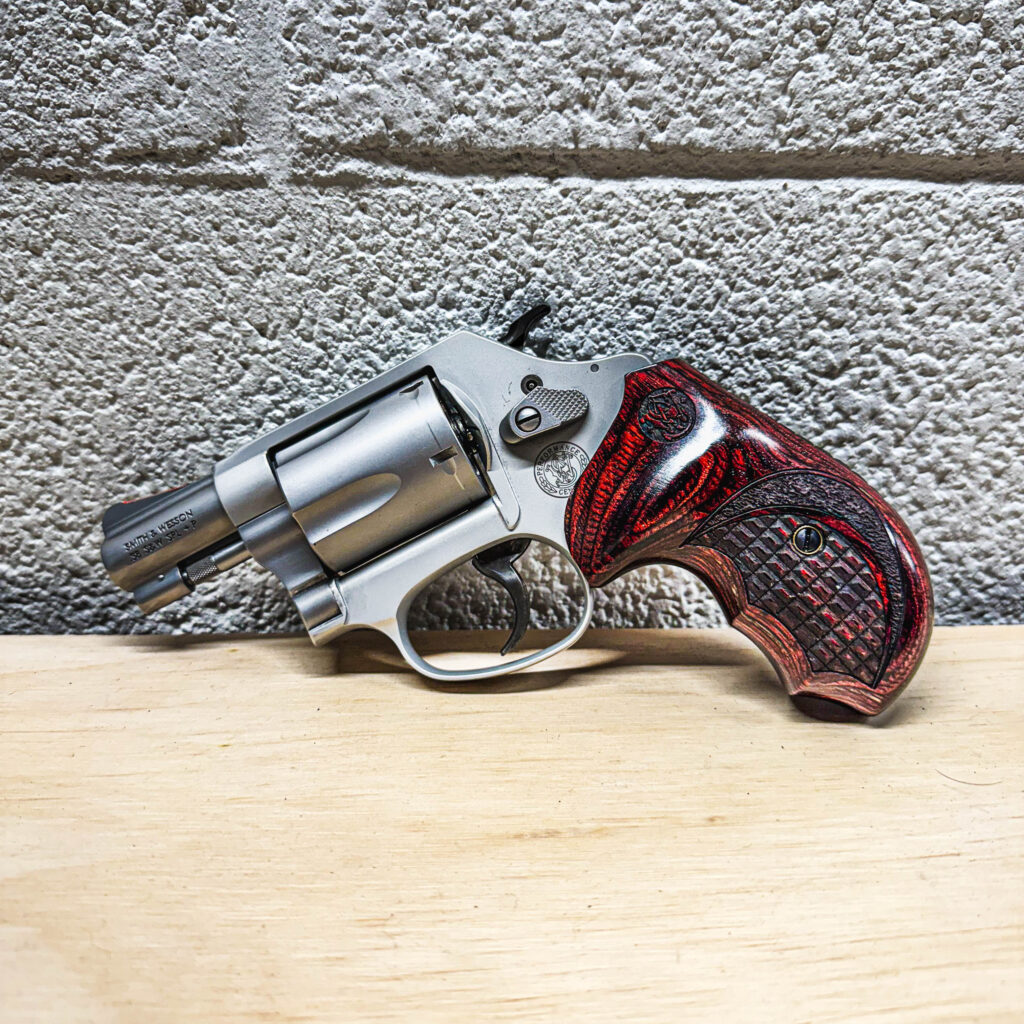
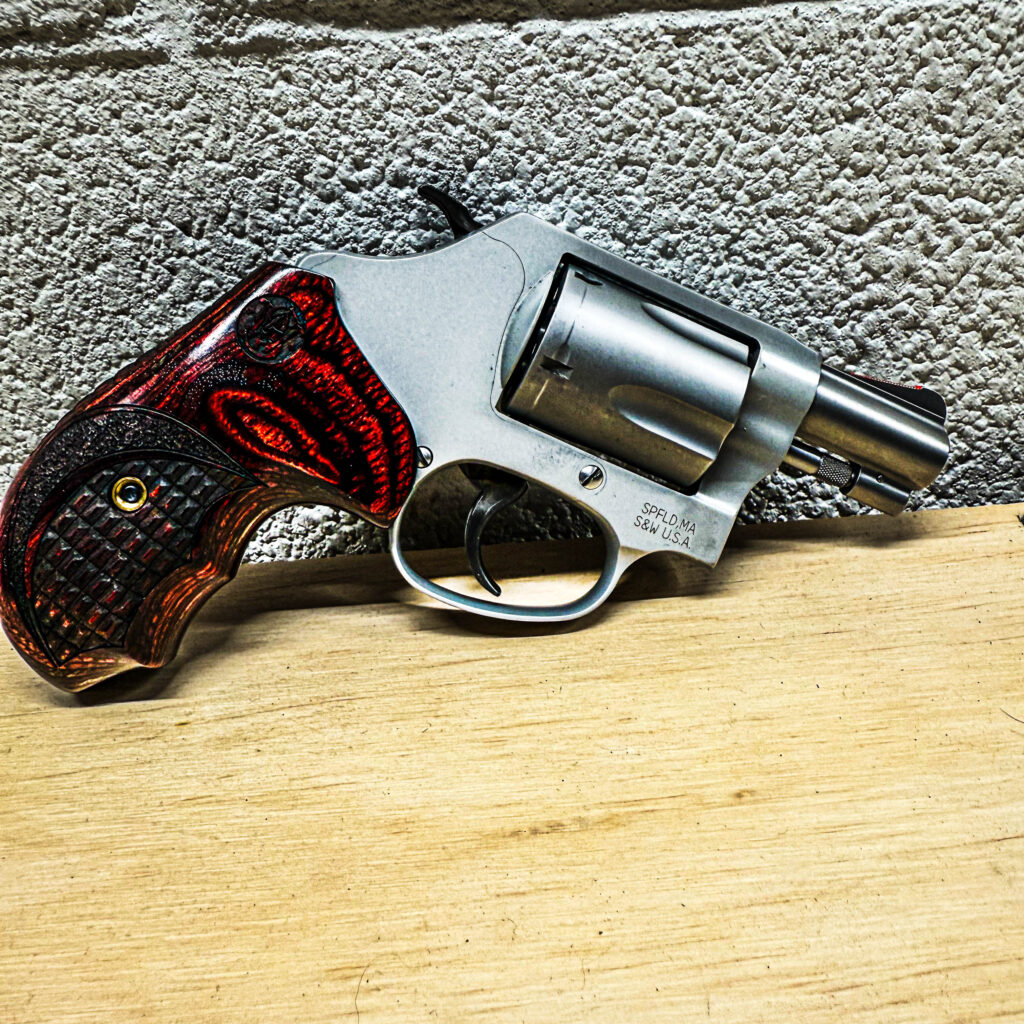
This is another 5-shot J-frame, chambered in 38 Special. The difference between this revolver and my Model 36 is mainly the material of the frame and the finish. The 637 is a stainless-steel finished, aluminum-framed gun. It being lighter makes it an excellent gun to carry without a belt. And the stainless finish provides an extra layer of protection against wear from my sweat and the elements. This is my gun of choice to carry when I am running. Due to its lack of weight, it doesn’t wear me out on a long run (for me, a “long” run is anything over 2.5 miles). I often carry it in a “Smart Carry” elastic waist holster. While it is not the fastest to access, it at least gives me a gun. And the 2-inch J frame on my waist is better than my 12 gauge at home. The one thing this gun has is the Performance Center action job. While this action is noticeably better than a stock 637, I still prefer the action on my 36. But that is a sentiment you will find from many who have experience with both new and old Smiths. New Smith triggers are good, but old Smiths are just immaculate. Regardless, this revolver is still perfectly serviceable. The only thing I would change, and this applies to the Model 36 as well, is the sights. Both of these models have crude sights. I would much prefer something like what is offered on the new “Ultimate Carry” J frames from Smith and Wesson. Maybe one of these days you will see one of those features here, but for the present, this is what we have, and I certainly do not feel under-equipped with them.
Smith and Wesson Model 14, Target Masterpiece
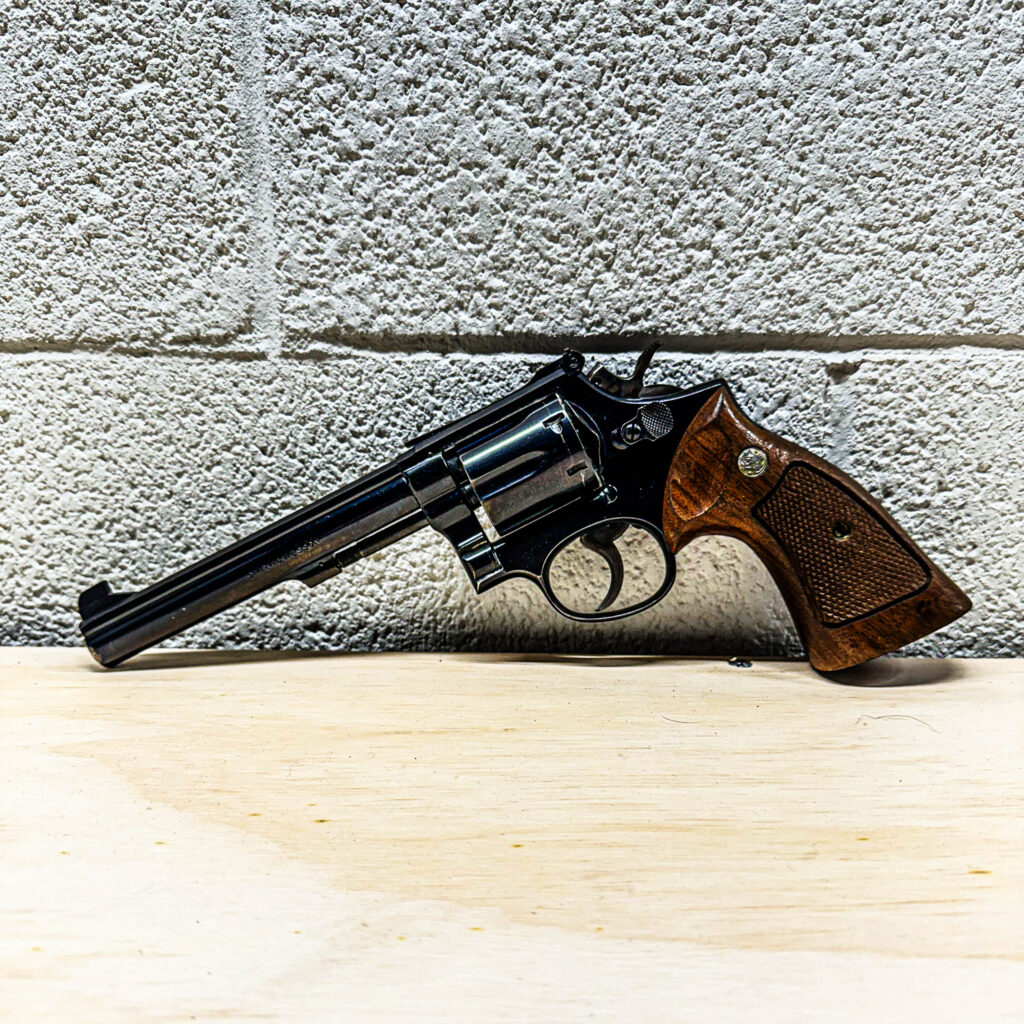
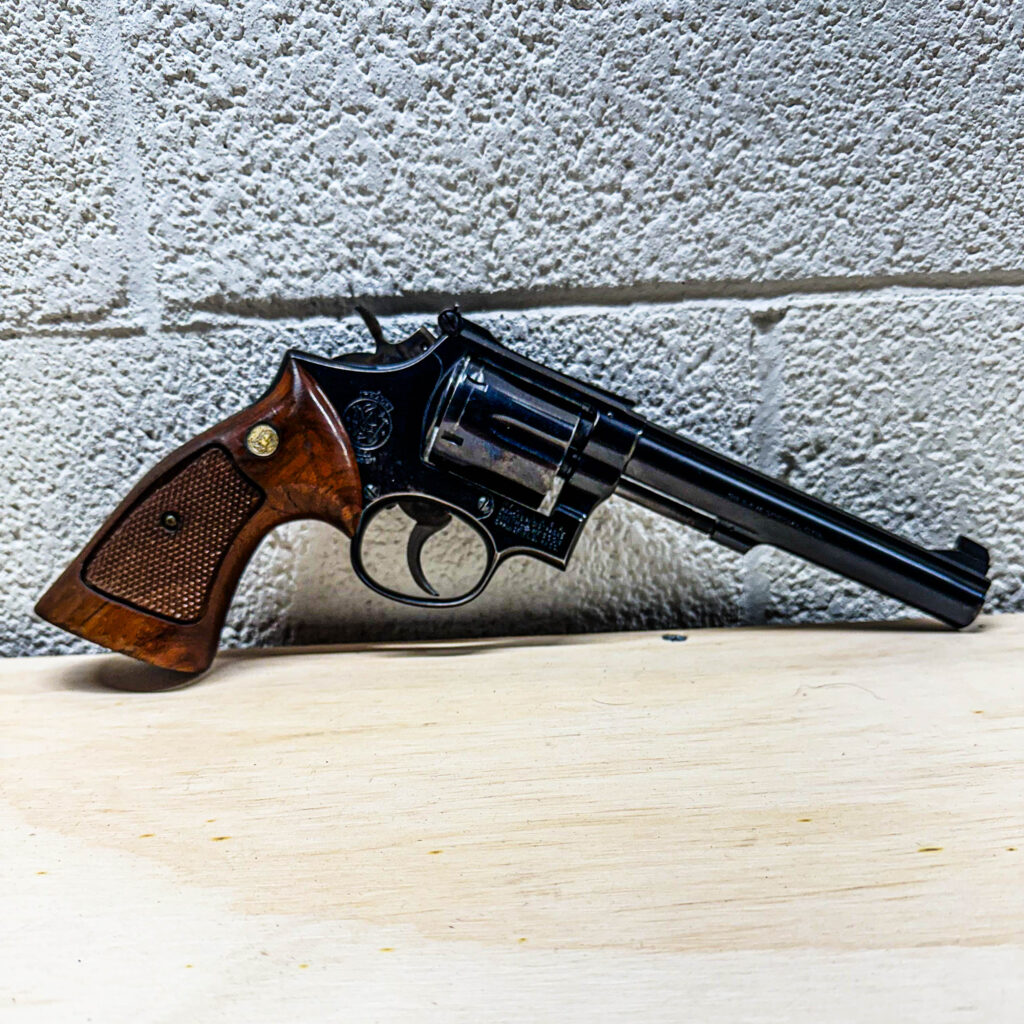
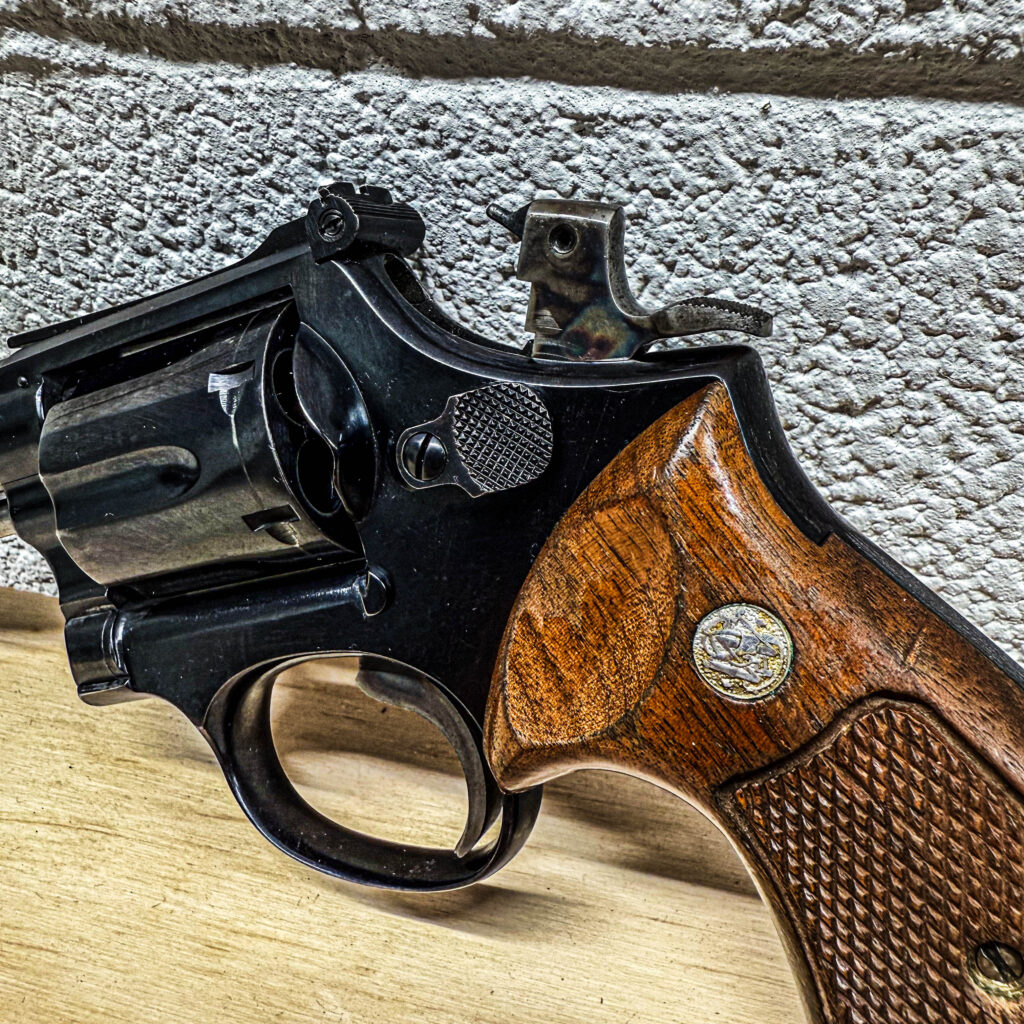
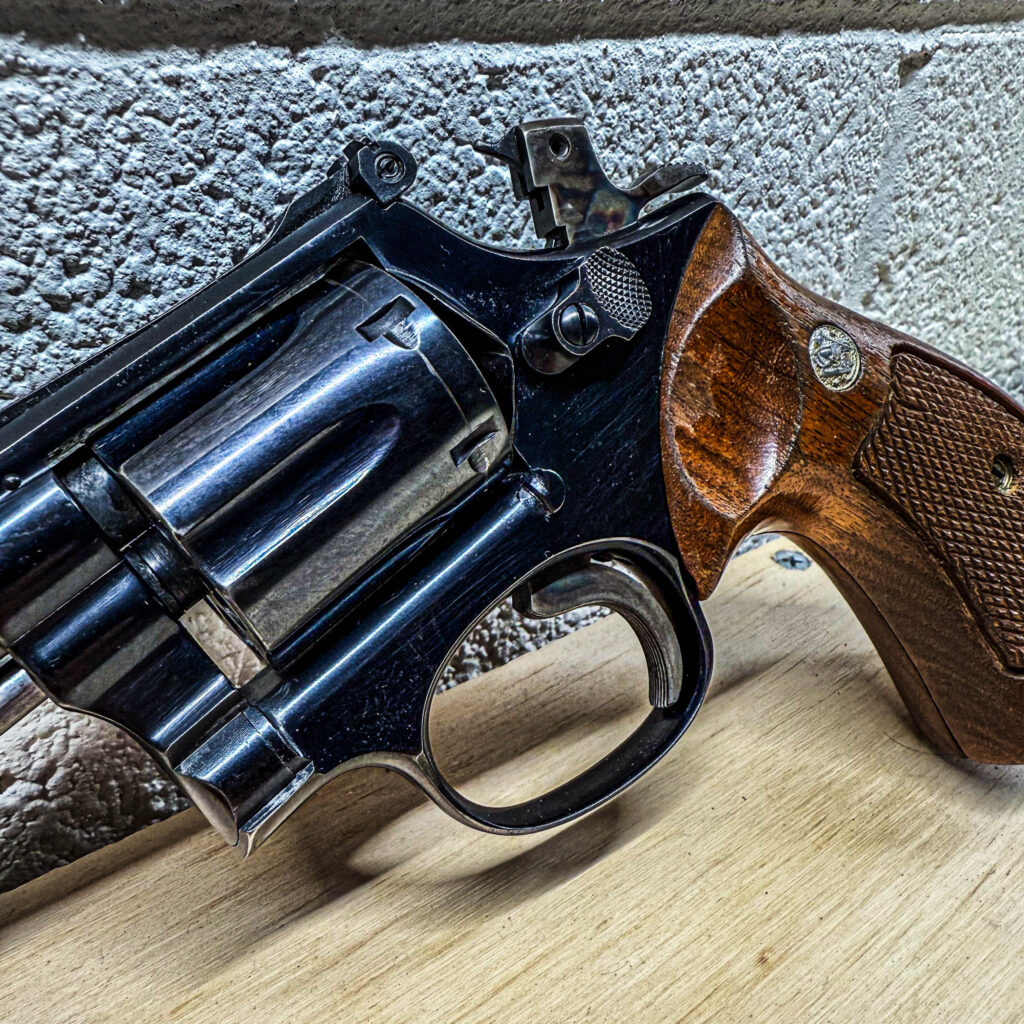
As I have stated before, this is the gun I originally learned to shoot handguns and revolvers with. It is the one that sparked the flame of my love for classic Smith and Wessons. This revolver belongs to my father, but primarily lives with me. I still frequently shoot it. While not the most practical concealed carry gun, it makes an excellent field gun or target shooting gun. It features a 6-inch barrel, adjustable target sights, wood stocks, and one of my favorite revolver triggers of all time. I may be biased on that last part, being that it is the one I learned on. Even if I am, it is still the view I hold. I even prefer this trigger to the one that is on my Model 27, which has a fantastic trigger. The Target Masterpiece is outstandingly accurate, and at the time of writing, I am anxious to try out my Winchester 231 load that proved to be so accurate out of my 686. I feel that the load with this revolver may be a combination set forth by the Lord himself. That may be some hyperbole, but I look forward to excellent results anyway.
Smith & Wesson 28-2 Highway Patrolman
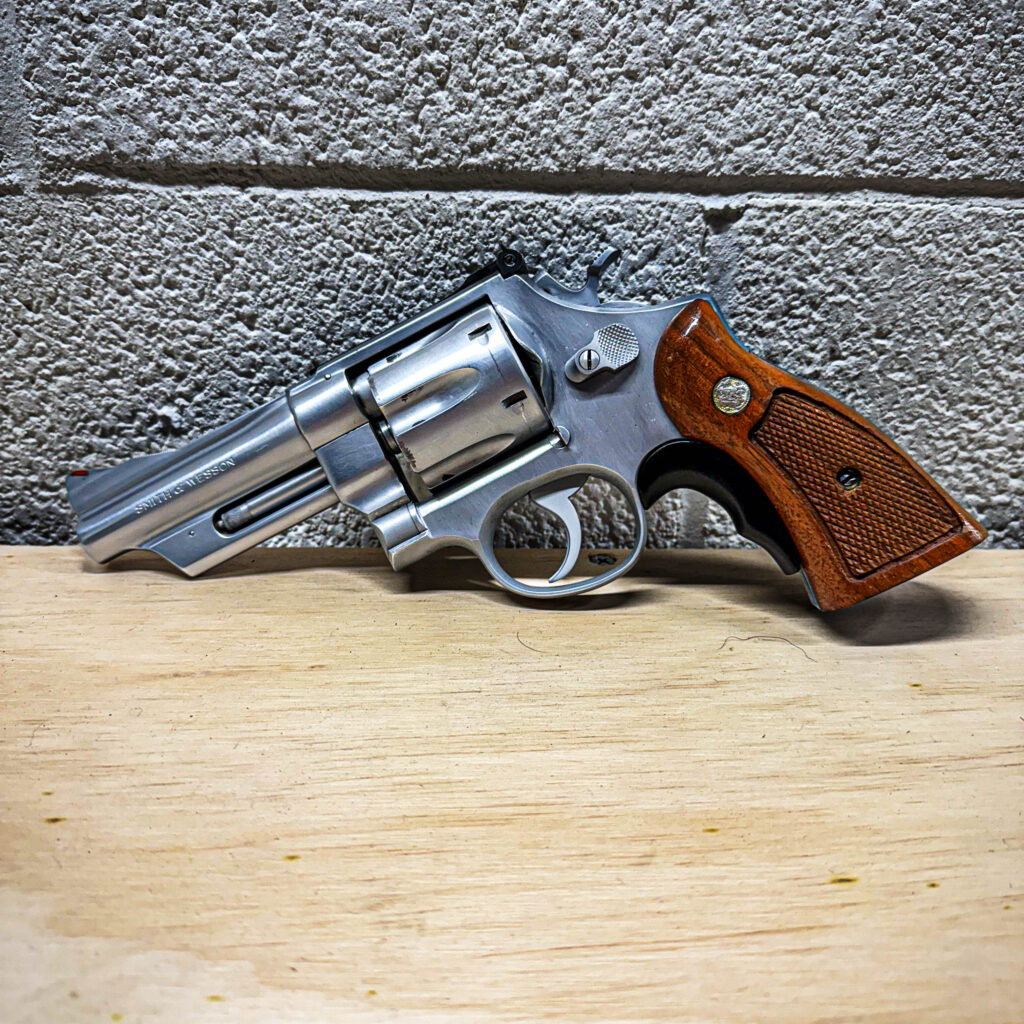
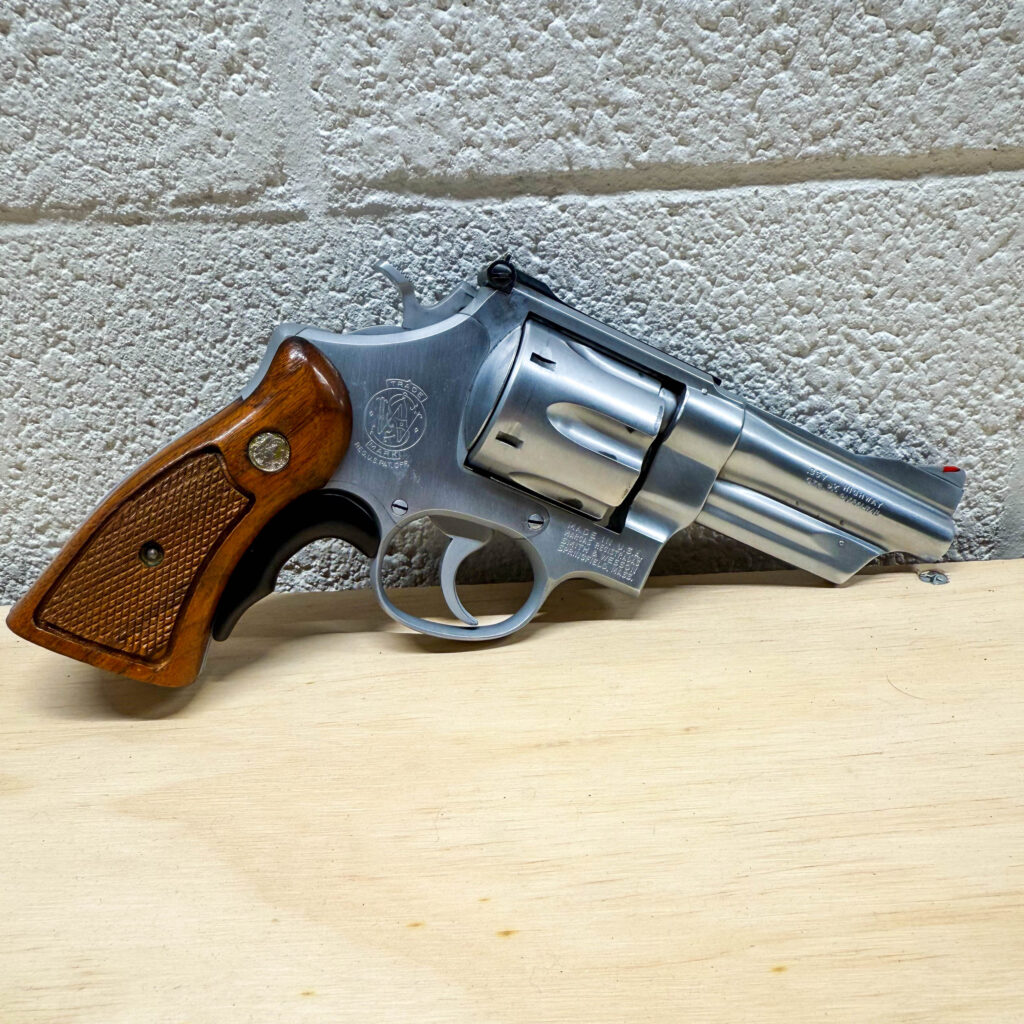
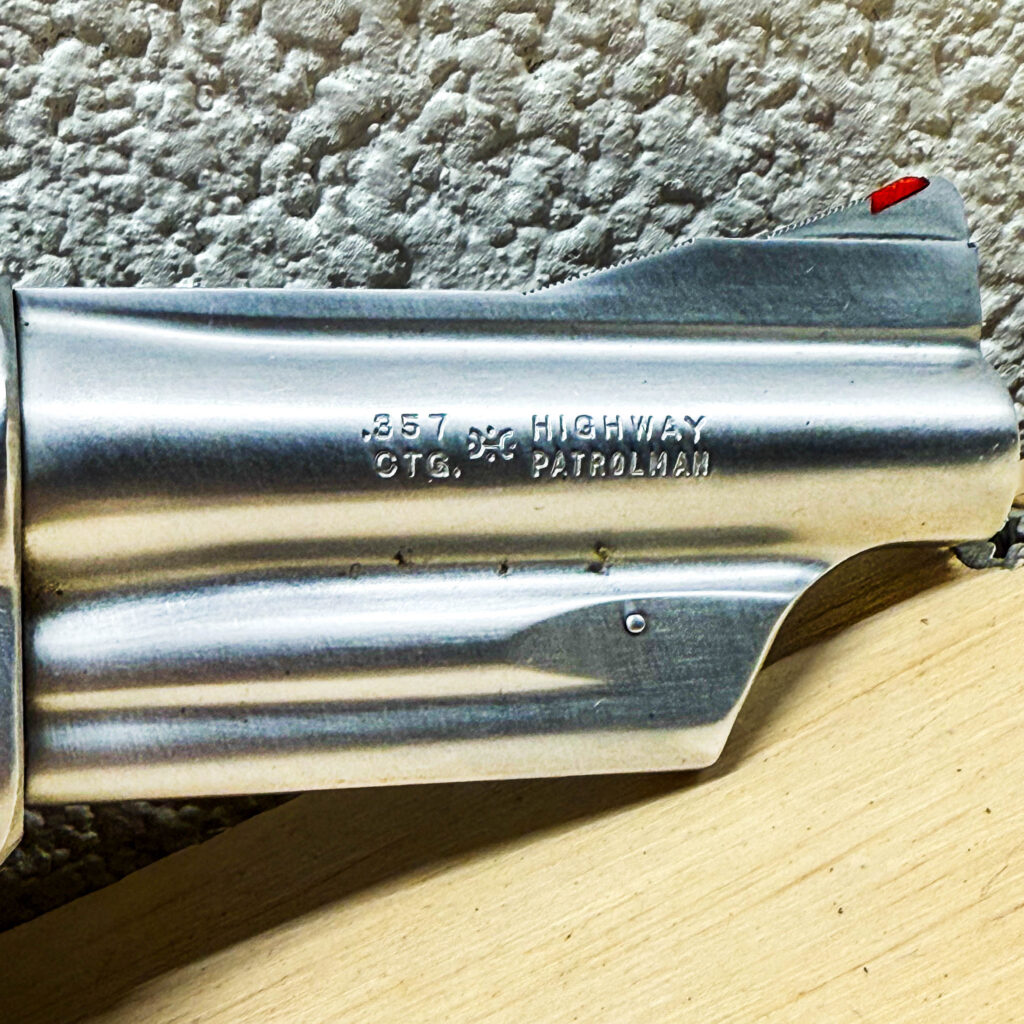
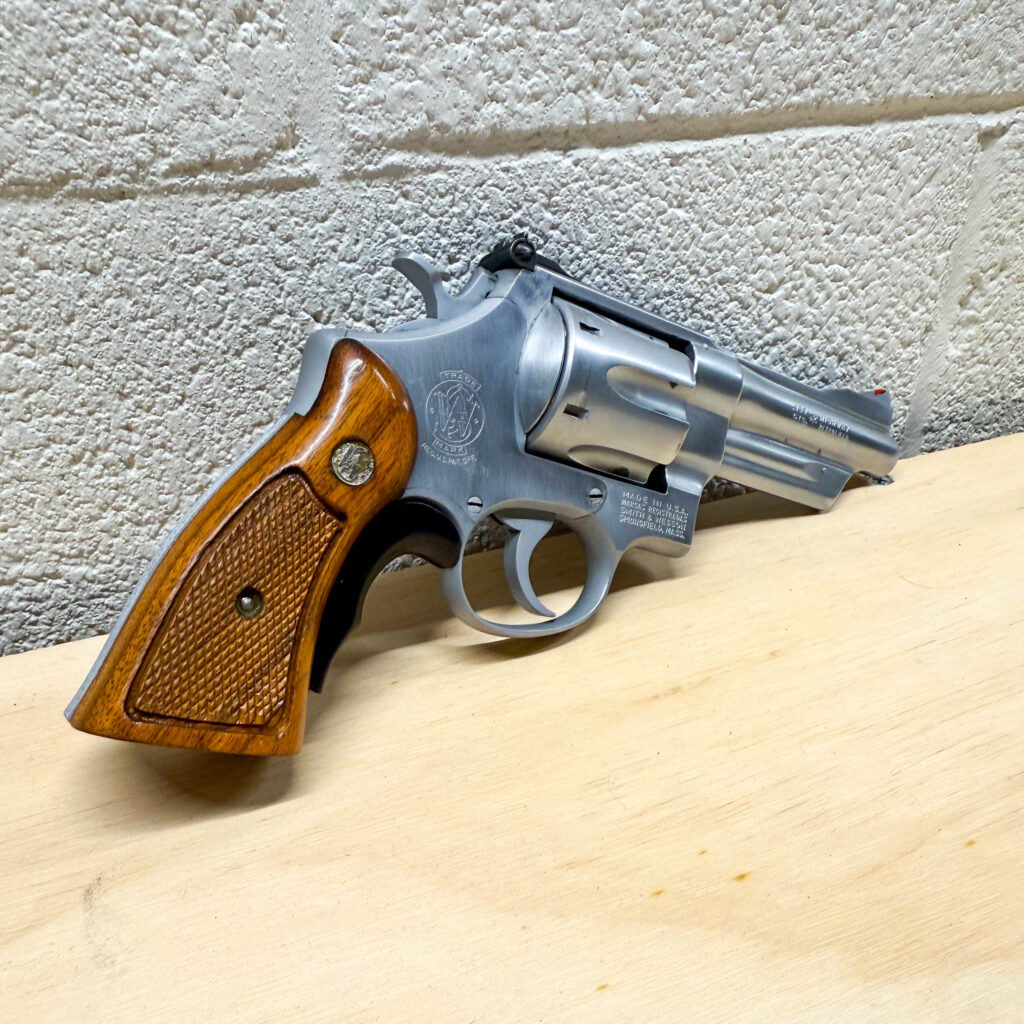
Due to the time it took me to get good-quality pictures, this article was written over several weeks. And in that time, I was able to find a gun I had searched high and low for. One day, I was on a motorcycle exploring some roads I had never been on. As I was coming through a curve, I passed a sign for a gun shop. I have a hard time not going into a gun shop I have never been in before. I feel like I am leaving a stone unturned. So, the closest place I was able to turn the bike around, I went back. Down a long driveway, I was met with a sizeable shop front. I walked through the glass front doors and was met with a large main showroom, as well as a showroom off to the side. This shop also had a range available. Since I was on the bike, I didn’t have my range bag with me, so I just stuck to the showroom counters. As I was perusing some of the cabinets, I saw something that struck me as odd. It was a “stainless” Smith revolver, but the tag was marked “Model 28-2”. Anyone who knows about how Smith and Wesson uses their model numbers knows that the Model 28 is not a stainless gun, and if it were, it would be a “628”. To my knowledge, no such revolver was ever produced, at least in any sizable quantity. The tag also stated the gun had a 6-inch barrel, when it clearly had a 4-inch barrel. I asked the sales associate to see the gun. Sure enough, when I opened the cylinder and looked at the side of the frame, it said “Mod 28-2”. But if it was a 28, then it shouldn’t have been stainless; it should have been blued. I looked it over, and it seemed to be a fine revolver, but I figured it had been refinished. I left the shop without buying anything and continued my ride. When I got home, I decided to look into this. I found that Smith and Wesson allegedly produced 54 4-inch Model 28-2s with a brushed nickel finish. When faced with the possibility that I had just passed up a 1 of 54 Smith, I jumped right back on the bike and went back. I had no sure way to tell if this one was truly one of those 54 guns or if it had just been refinished. But I would never forgive myself for passing that up. So I brought her home with me.
These a some of the wheel guns you will see most often here. There will be others, but these will be used frequently. Now, looking at that list, you may think to yourself “gee, there is a lot of brand diversity there”. And yes, I do have a strong devotion to Smith revolvers; however, as time goes on, I hope to acquire some Rugers, Colts, and a few other less popular brands. But up until now, I felt that if I were to spend my money on a revolver, it would be a Smith.
Now there is one more reason that I prefer the revolver. And that is aesthetics. I think there is now better looking gun than a high-polish blued Smith revolver. Many may disagree with that, and that’s okay; there is no law saying you cannot be wrong. And of all the revolvers I have seen, I have found few to be as handsome as my Model 27-2. In my mind, that is the pinnacle of where elegance meets durability. But there is one more aesthetic reason I prefer the revolver. Due to my profession, I am not allowed to have facial hair of any kind, except a mustache. And while in my opinion a mustache is a great look, many have reminded me that I look like (insert your favorite 70s adult star), and less like Tom Selleck. So I find it fitting, if I am to be a ’70s man, then my arms should coincide.
These are some of my favorite revolvers. But I cannot imagine we all have the same favorites. Head on down to the comments and let me know what your favorite revolvers are. Are you a Smith and Wesson? Maybe a Colt or a Ruger guy? Let’s talk about it.
Until next time, friends
Chuck