
I strongly advocate for the appropriate, proper, and practical use of all firearms. While I certainly have my favorite firearms, I recognize that some of my choices may not be the most popular. Nobody has ever said I was known for being in Vogue. One of my favorite choices for the prepared citizen is a shotgun. For many years, this was a standard choice for many; however, in recent years, its popularity has declined. This once-prized and prevalent weapon was seen in use by many armed professionals and citizens alike. The shotgun is known for its versatility and lethality, with centuries of use to prove it.
History of the Shotgun
The history of the shotgun is older than the term “shotgun” itself. Before we had designated shotguns, folks would load their muskets with the old “buck and ball” load. This entailed loading several pieces of smaller caliber buckshot and one larger musket ball. Considering the inherent inaccuracy of the old muskets, this gave the user a far greater chance of hitting their target, as well as an increase in lethality. Original shotguns were known as “fowling pieces” due to their use in wing shooting of game birds. The earliest definition I could find of a fowling piece comes from Wikipedia and is pulled from The 1728 Cyclopaedia and states that a fowling piece is a portable firearm used for the shooting of birds. The definition goes on to state that these arms typically had a 5.5 to 6-foot-long barrel. While this is much longer than what is considered normal for a shotgun today, keep in mind that firearms technology was significantly different then than it is now. As bores began to get smaller, shotguns started becoming their own entity.
In more modern times, the shotgun has been hailed not only for its ability to be an effective hunting implement, but also, an excellent combat arm. In the days of the Old West, it was common to see a double-barreled shotgun riding on the buckboard of a wagon, in the passenger seat. Men would be contracted to ride as protection for whatever cargo the wagon was carrying, and many chose a shotgun because they were able to put more lead down range than they could with a rifle. And with most rifles being muzzle loaders, they had twice the capacity of a standard rifle. This is where the term “riding shotgun” began its life. Moving into the 20th century, shotguns saw use in both World Wars. The shotgun was so effective here that countries began petitioning that shotguns not be allowed in war due to their effectiveness. As the wars progressed, the shotgun became even more versatile. In more recent wars, shotguns began to see use as true tools, being used to breach doors and locks. And to this day, shotguns see use in militaries, police forces, and civilians alike.
Why the Shotgun is Still Relevant
Why, in the day of high-capacity modern carbines, would I ever want to use a shotgun? They are limited in capacity, range and require a knowledgeable user to drive the gun. There are several good reasons to consider a shotgun. Those are versatility, simplicity, lethality, EFFECTIVE range, sighting systems, and cost effectiveness. I wholly understand the shotgun is not the choice for everyone; however, for those who find it to fit their needs, it is a viable choice. I will never try to tell you what to do, I only share what I do, and what I think you should consider.
Let’s dive into versatility. It is no secret that shotguns are versatile. Many people cite being able to take a standard pump shotgun, like a Remington 870, and change the barrels for field use or home use. But what if you didn’t need to change anything? What if your field gun could be used in the same configuration while defending your home? It can. While a field-barreled shotgun is not optimal for use inside a structure, to say it is incapable is blatantly wrong. Keep in mind, we are discussing home defense, not CQB. I am not saying to use a field gun as the point man on a SWAT team. But I am not on a SWAT team, and most of you aren’t either, but for those who are, don’t abandon your Benelli M4. When looking at how we lawfully use a gun for home defense. Unless you have a reason to go clearing rooms, like making sure children a safe, you should pick a spot and stay there. For example, if you experience a break-in during the night, and you don’t need to go to other parts of the home, you will be in your bedroom. While staying in the bedroom, you are unlikely to notice the difference between an 18-inch barrel and a 26-inch barrel. And if you do need to go room to room, it is wise to consider using a handgun, as having the extra hand free can be a big benefit. When trying to secure family members, especially children, you may need that other hand to guide them with. While a handgun is not the MOST effective choice, it is still AN EFFECTIVE choice. But that isn’t what we are here to discuss today.
Simplicity. This may seem counterintuitive because I have already acknowledged that a shotgun requires a knowledgeable user to drive the gun, but they are quite simple, especially pump and break actions. A break action is just a trigger, safety, and an action release. And a pump action is essentially the same, just with the pump added in. Simplicity not only makes the gun more effective, but it also means there are fewer parts to break and fewer chances for it to malfunction. With pumps, you must be mindful of “short-stroking” the action. This is where the action is not fully cycled; a shell is ejected, but the next shell is not released from the magazine tube. This problem does not exist with break-action shotguns. And I want to go ahead and say this: I am aware that break actions are often only one or two barrels. For home defense, this is usable. I am not saying it is optimal, but if it is all you have, it certainly is effective. In most home defense encounters, two shotshells are enough. It may not be enough for every single situation, but it is for most. And if you add a butt-cuff that holds an extra 5-6 rounds, that is more than enough, so long as you practice your reloads. And that goes for both pumps and break-actions.
On to lethality. Most of us know that shotguns are incredibly lethal. They are not a magic wand that makes bad guys disappear the second they are pulled out, but when driven appropriately, they are incredibly effective at incapacitating someone who wishes to harm you. Far and away, the two most common shotgun gauges are 12-gauge and 20-gauge, and both of these are more than enough for anti-personnel purposes. With common buckshot sizes, either gauge will deliver plenty of stopping power, provided you have the correct shot placement, but we already know that caveat applies to anything.
This next point goes hand in hand with lethality, and that is effective range. We know that shotguns excel out to 40 yards. I don’t know of any home defense shootings that had shots past 40 yards, but if you do, I sure would love to hear it. At many home defense distances, buckshot will perform very similarly to a rifle. Many people consider the rifle to be the king of home defense. So if I can have something that performs very similarly to a rifle, that provides even greater stopping power, why wouldn’t I do that?
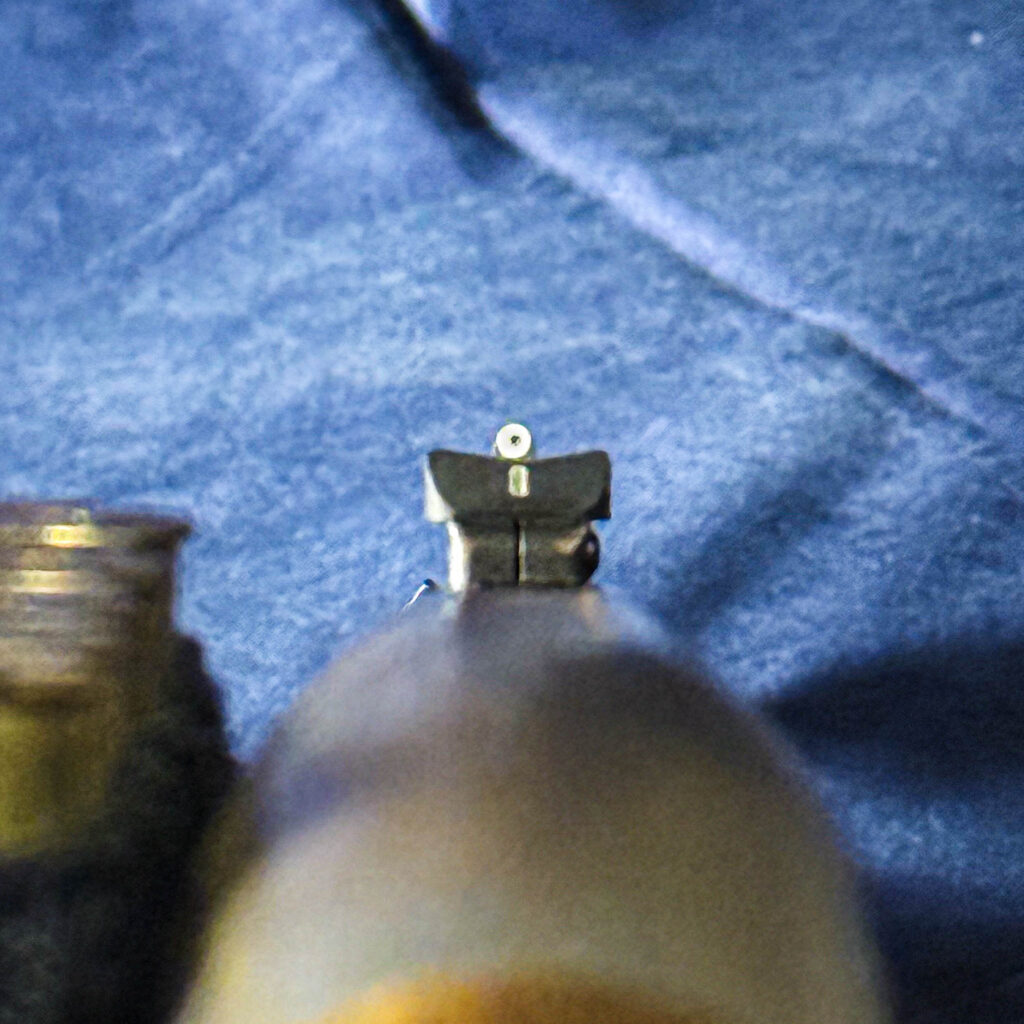
And speaking of stopping power, all of that is irrelevant if you don’t hit your target. So let’s talk about sights. I think for close-range, fast-paced sights, shotguns have some of the best in the business. Bead sights are plenty adequate for home defense distances and beyond. But my favorite are the express sights that are featured on my old police model 870.
One of the biggest benefits of the shotgun, for many, is the cost. Numerous great shotguns can be had for less than $400. I have found that the best deals can be found on the old police trade-in Remington 870s. When I bought mine, it was only $280. Upon receipt of the shotgun, it was found to be in excellent working order but had significant cosmetic wear. I do not mind the wear; it is a working gun. The two most common pump shotguns are the Remington 870 and the Mossberg 500. I have used both, and while I find both designs to be excellent, I prefer the Remington.
What to Look For in a Combat Shotgun
We have already established that I believe most shotguns are suitable for home defense; however, some features are optimal. The first of these is a pump-action shotgun. Autoloaders can be particular about what ammunition they like, beak actions have low capacity, and lever actions aren’t too prevalent. The pump action is simple, reliable, cost-effective, easy to configure for the end user, and has high levels of aftermarket support. All of these features combined create the perfect storm of an excellent tool for home defense.
The second feature I like is a “short” barrel, and by this, I mean a barrel that is between 18-20 inches. 18 inches is the legal minimum for a shotgun barrel. And while a shorter barrel can be had with a permit, I do not find the extra paperwork, effort, and fees to be worth the trouble. An 18-20 barrel also provides an excellent sight radius for those of us using rifle-type sights, whether they be ghost ring or express sights.
Another useful feature is a way to continually load the gun. I know I just said that two rounds should be adequate, but in the interest of being prepared for when it isn’t, we need to be prepared to load the gun again. And for this, I want to look at methods that keep ammunition on the gun, versus having some kind of off-body carry system. There are two primary systems for this: the side saddle and the butt cuff, and these aren’t mutually exclusive. Side saddles typically come in two types, either a hard side saddle mounted to the side of the receiver or a velcro “card” that is left loaded, but when it runs dry, can be torn off and replaced with a fresh one. And for those believing they might need it, you can have one on the receiver and another on the butt stock.
A way to mount a white light is also a useful feature. Some shotguns come from the factory with a light mounting option, while others you will need to use an aftermarket solution. Either way, a solid light mounting option is a wise choice. It is also a wise choice to use similar lights across all your different platforms. Currently, none of the pistols in my inventory feature accessory rails, and I prefer to use a handheld light with my handguns, so I use the same light on my long guns. My light of choice is the Surefire G2X. This light gives an excellent balance of battery life, lumens, candela, beam pattern, durability, and cost. You can find lights that cost more or cost less, and you can find lights that perform better or worse, but I have found this light to be excellent for my needs.
An option that is often overlooked is a shorter butt stock. On my trap guns, I typically use a stock with somewhere around a 14.5-inch length-of-pull; however, on my combat shotguns, I prefer a stock between 12 and 13 inches. This does a few things, first, it makes it more maneuverable for me, but also, it allows smaller-statured shooters to shoot the gun well. Many tactical shotguns will come with a shorter stock, but if yours does not, you can cut the stock down, or aftermarket options are usually readily available.
My final option is a good sighting system. The vast majority of shotguns have adequate sights for our purposes. Even though most sights are adequate, some are definitely better than others. For iron sights, I have found fewer sights better than the series of sights from XS Sights. They offer options for both single bead sights as well as express sights. Either is a fantastic option; it is all just a matter of preference.
My Choice for a Combat Shotgun
So now you know what I like, let’s look at what I use. Again, I am giving the disclaimer that I am not saying this is what you should use; this is just what I use. My shotgun is a police trade-in Remington 870. It features a 20-inch barrel, express-type rifle sights, an extended magazine tube, and the original wood furniture. This gun has seen a lot of use before it came to me, but it is mechanically in excellent shape. I was able to get it for $280. The only thing I have changed about it is the sights, and I added the velcro side saddle. I will admit that several years ago, when I added a piece of Velcro to my shotgun, it did feel strange and uncouth. However, after I got in some practice time with it, I really began to enjoy the Velcro. Before the velcro side saddle, I used a hard plastic side saddle that had been mounted to the side of the receiver. And while this did work, it was heavier, bulkier, and did not retain shells as well over time. Another great aspect of the velcro saddle is when the elastic begins to not hold shells as well, throw it away, get a new one, and you are right back to where you need to be.
On the topic of sights, the express sight picture you saw earlier in this article is from the sights on this shotgun. I have found this to be excellent for the combat shotgun, combining the speed of the bead sight with the accuracy aid of a rear sight. These are not target aperture sights, but that is not what I wanted on this gun. I wanted a durable and fast sight that stays put on a heavy recoiling gun like a shotgun. Many folk make the point “you won’t use sights in a gunfight”, which is accurate, if you train that way. There are documented accounts of folks who distinctly remember seeing their sights, and folks who know they never saw them at all. So rather than making a blanket statement about sights being useless, I suggest training with them to err on the side of caution.
As always, friends, I want to hear from you. Are you a fan of shotguns? What do you use? What features do you like? Head down to the comments and tell me.